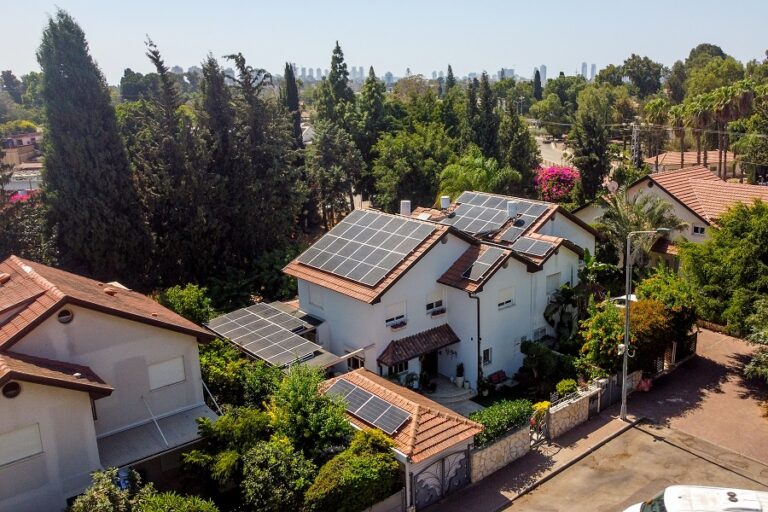
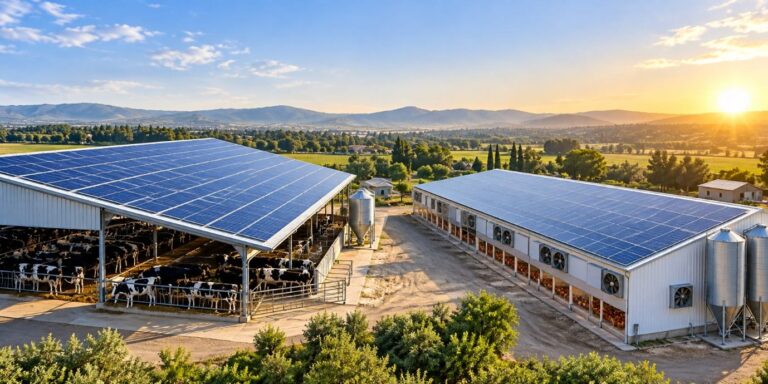
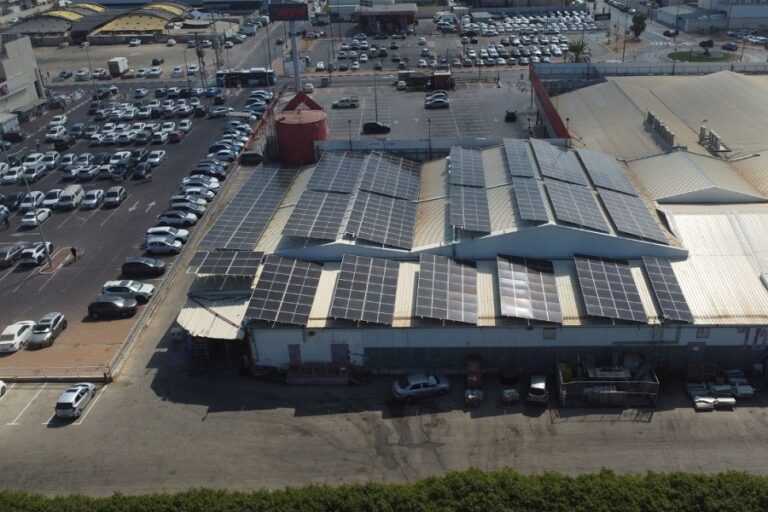
Farm owners on moshavim are well aware of the economic challenges of agriculture. Operating costs, irrigation, labor and equipment all affect the farm’s profitability, while agricultural income depends on factors that are not always within the farmer’s control.
But what if the land could generate an additional income source, without necessarily giving up its agricultural use?
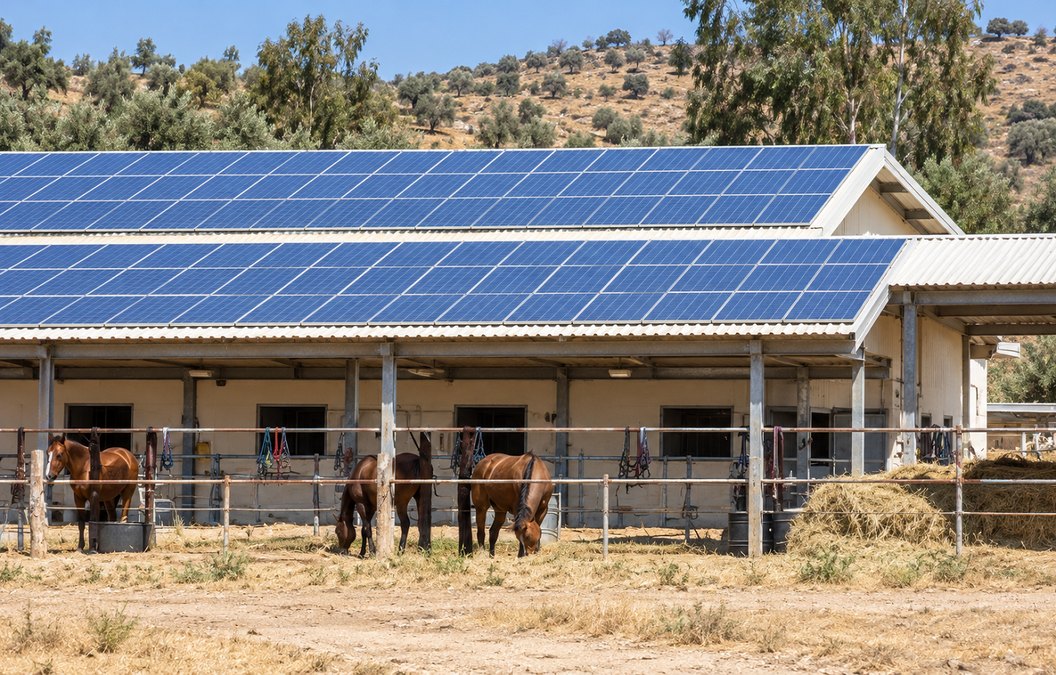
The option of building a solar system on Plot A allows farmstead owners to explore generating electricity on the farm’s land. In suitable cases, agrivoltaic solutions can also be integrated, allowing agricultural activity to continue alongside the production of renewable energy.
Planning and legal developments, including a ruling by the appeals committee published in July 2026 on the subject of the betterment levy, add further interest to the options available to farm owners who wish to use their land to generate electricity.
What Is Plot A, and Why Is It Interesting for Solar?
An agricultural farmstead on a moshav includes plots with different characteristics and uses. Plot A usually contains the residential area and the adjacent agricultural land, where farm buildings and agricultural infrastructure may also be located.
In recent years, planning arrangements have been advanced that allow, subject to conditions, the installation of solar systems on agricultural land within Plot A.
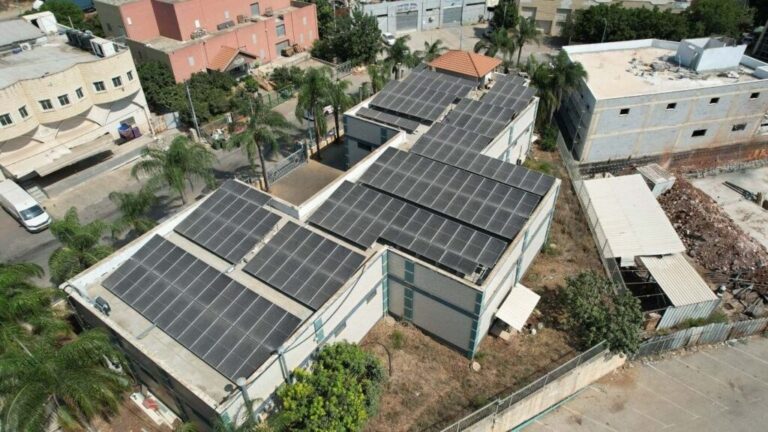
For farm owners, this means it is possible to explore using a suitable area to generate electricity, rather than relying only on the roofs of the house or the farm buildings.
That said, merely holding Plot A does not grant automatic approval to build a system. You need to examine the land’s designation, the rights in the farmstead, the planning track and the option of connecting the system to the electricity grid.
A Solar System on Plot A: Do You Have to Give Up Farming?
One of the main questions on farm owners’ minds is what will happen to their agricultural activity after the panels are installed.
Here it is important to distinguish between a ground-mounted solar installation and an agrivoltaic system.
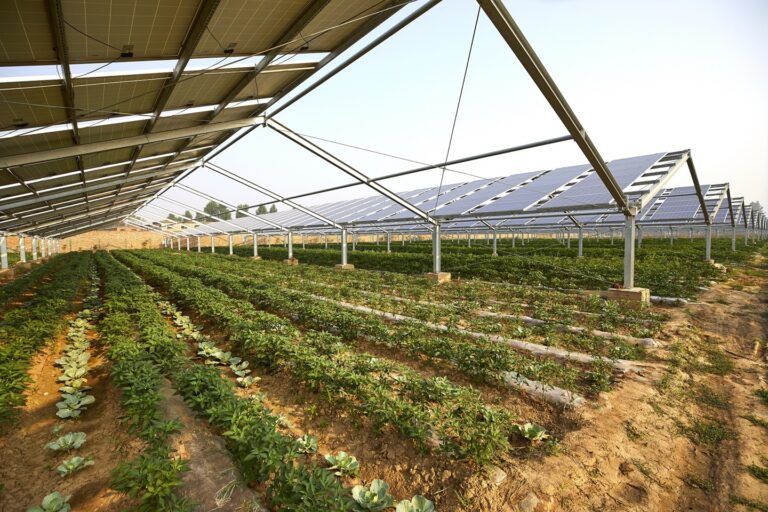
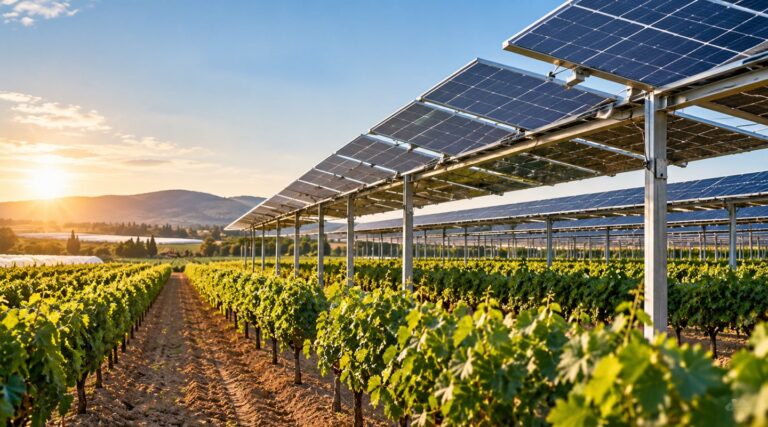
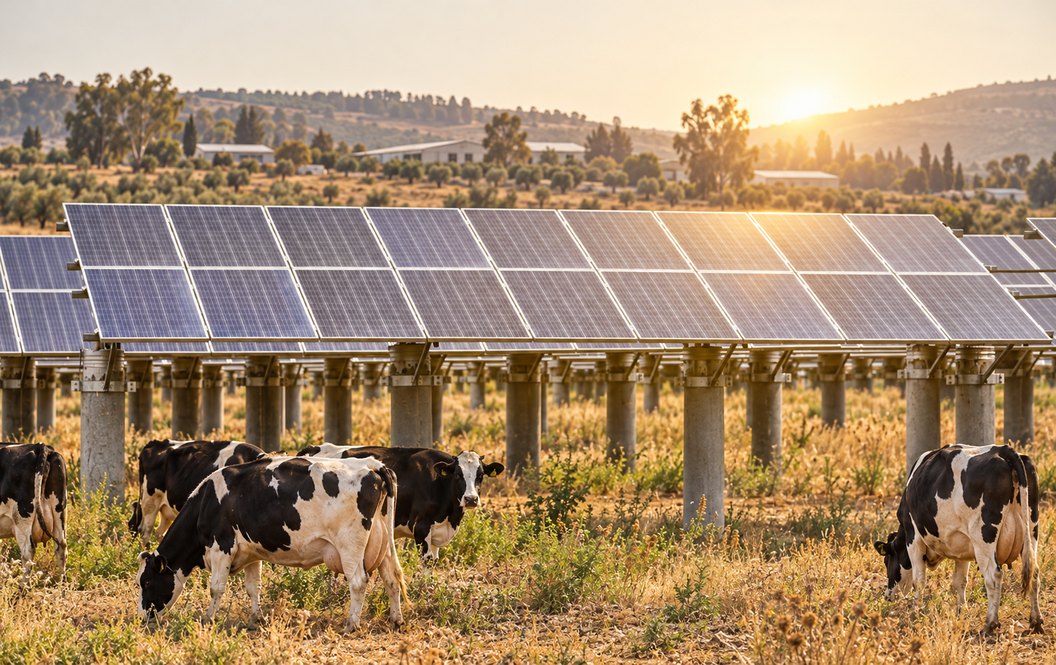
In a ground-mounted solar installation, the primary use of the installation area is generating electricity. An agrivoltaic system, by contrast, is designed to combine electricity generation with active agricultural cultivation on the same land.
The panels may be installed on an elevated structure, depending on the design, in order to allow growing and agricultural work to continue.
Learn more about agrivoltaic systems
How Can a Solar System Fit into the Farm’s Daily Operations?
Building a system on agricultural land requires attention not only to the placement of the panels, but also to the way the farm is run.
On a farm where tractors and agricultural equipment operate, for example, the width of the passages and the access to the cultivation areas must be taken into account. Where irrigation systems exist, it is important to plan the infrastructure so that it does not interfere with ongoing operations.
The type of crop also affects the design. Not every crop responds in the same way to shading, and therefore adapting an agrivoltaic system requires agricultural assessment alongside the engineering design.
The goal is to create a system that enables electricity generation while maintaining the conditions required for agricultural activity, in accordance with the installation track and the relevant approvals.
Can a Solar System Be Built on Any Plot A?
The answer is not necessarily. The ability to build a solar system on Plot A depends on a range of conditions, and not only on the size of the available area. Merely owning or holding the rights in the farmstead does not grant automatic approval to build a system.
Among other things, the following should be examined:
- Land rights status: whether the land uses are regulated and whether relevant restrictions apply.
- Land designation and location: whether the area meets the planning conditions of the chosen track.
- Nature of the agricultural activity: whether a system can be integrated without harming the agricultural cultivation requirements.
- Electricity infrastructure: whether the system can be connected to the grid and what is required to do so.
- Licensing and permits: which approvals are required depending on the type of installation and the characteristics of the farmstead.
In 2026, a planning arrangement for agrivoltaic installations was approved under National Outline Plan (Tama) 1/24, intended to enable a combination of solar electricity generation and continued agricultural activity on the land. However, this track should be distinguished from the tracks that apply to ordinary ground-mounted solar installations on Plot A.
Therefore, before building a solar system on an agricultural farm, it is important to carry out a professional feasibility study and examine the planning track, the land rights and the required approvals according to the farm’s characteristics.
Check your suitability with Rotem Energy
An Important Development in 2026: What Changed Regarding the Betterment Levy?
In July 2026, a ruling by the appeals committee in the Central District was published that may have economic significance for farmstead owners who wish to build solar systems on Plot A.
The ruling was issued following two appeals filed by holders of rights in farmsteads in the moshavim of Bnei Atarot and Kfar Sirkin, after they were required to pay a betterment levy for the installation of photovoltaic systems. The appeals committee determined that, in the circumstances discussed, the conditions were met for applying the betterment-levy-substitute mechanism, under which the Israel Land Authority transfers a payment to the local authority instead of charging the rights holder a levy.
Following this, in 2026 an update was also published by the Ministry of Energy and Infrastructure on the subject of regulating the betterment levy for agrivoltaic installations. According to the publication, a temporary arrangement on the matter was approved, alongside a betterment-levy-substitute mechanism.
These are developments that may remove economic barriers in some projects, but it should not be inferred from them that a blanket exemption from the betterment levy exists for every farmstead owner. The applicability of the arrangements depends on the type of installation, the rights in the land, the planning track and the conditions set out in law.
It is also important to distinguish between the photovoltaic installations discussed in the appeals committee’s ruling and agrivoltaic systems, which may be subject to different arrangements.
Read the official publication by the Ministry of Energy and Infrastructure

What Is the Economic Significance of a Solar System for Farm Owners?
For a farm owner, the main advantage of a solar system is the ability to add an income source based on electricity generation. Unlike agricultural income, which is affected by yield quantities and produce prices, income from electricity generation depends on the system’s output, the applicable tariff and the terms of engagement.
That said, there is no uniform income figure that suits every farm. Economic viability is affected by the size of the system, the construction and maintenance costs, the connection terms and additional characteristics.
In an agrivoltaic system, the effect of the installation on the existing agricultural activity must also be taken into account.
Assessing the Solar Potential of Plot A
A solar system on Plot A can be an interesting opportunity for farm owners on moshavim, but realizing it correctly requires a combination of knowledge in solar design, electricity infrastructure and an understanding of the needs of the agricultural area.
We at Rotem Energy accompany solar projects from the feasibility study and design stage, through handling licensing and infrastructure, and up to building the system and connecting it. We operate with our own professional installation teams and provide support throughout the stages of the project.
Farm owners on moshavim who are interested in exploring the installation of a solar system on Plot A are welcome to contact the Rotem Energy team and check which options suit their farmstead.
Want to know if your Plot A is suitable for a solar system? To assess the solar potential of your farm.