You have thousands of square meters of empty roof at your factory. On the face of it, the math is simple: work out how many panels fit, multiply by their rated output, and you have the size of the system you can build.
In practice, that is only the first step.
When designing a solar system for a factory, the roof area tells us how much potential exists, but it does not yet tell us how much of that potential can be realized, or is worth realizing.
Alongside the roof area, you need to examine the factory’s electrical connection, the options for connecting and exporting to the grid, the consumption profile, the condition of the building, shading, roof orientation, the electrical infrastructure and the relevant regulation.
In large commercial systems, the difference between a system designed around “how many panels fit” and one designed as a single engineering and financial system can be significant over the years the installation operates.
The roof sets the potential. The connection determines much of what you can do with it
The roof area is, of course, a key starting point.
A large roof allows more panels, but the gross area is not the effective solar area. You have to subtract shaded zones, walkways for maintenance and safety, air-conditioning units, chimneys, openings, areas that are structurally unsuitable and other constraints of the building.
Once you understand what can be placed on the roof, a different question comes up: what does the electrical system we are about to connect the installation to actually allow?
A factory has a grid connection point and existing electrical infrastructure. How much generation can be integrated into it is not determined only by the number of panels that fit on the building. You need to look at the characteristics of the connection, the existing consumption, the infrastructure and what the grid in the area can offer.
That is why two factories with almost identical roofs can end up with completely different designs.
On paper, they have the same area.
In engineering and electrical terms, they can be two different projects.
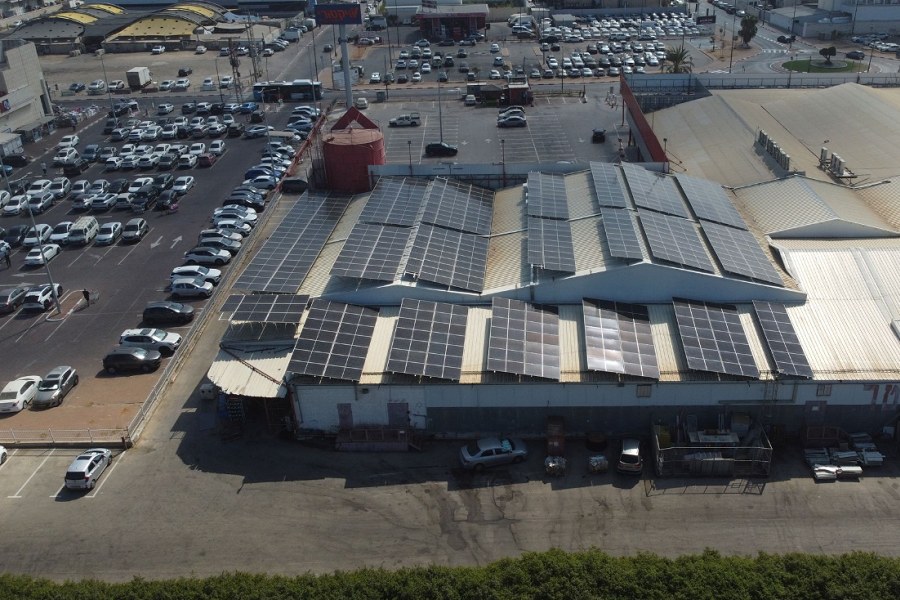
The right question is not “how many panels fit?”
In professional design, we prefer to start with a different question:
What is the right system for your specific factory?
To answer it, several layers of information are brought together.
On one side is the roof: its area, orientations, pitches, shading and load-bearing capacity.
On another is the electrical system: the existing connection, the switchboards and the infrastructure.
And alongside them is the activity of the factory itself: how much electricity it uses, at what hours, whether there are shifts, how consumption changes between workdays and weekends, and whether there is significant seasonality.
Only when these data are combined can you start talking seriously about the size of the system and its expected output.
Try our advanced solar calculator and get an estimate
At a factory, the time of day you use electricity matters too
A solar system does not generate the same output throughout the day. The generation curve rises in the morning, changes with irradiance and system conditions, and drops toward the evening.
A factory’s electricity consumption is not constant either.
A factory running at high load during daylight hours has a different profile from one where a significant part of the work happens on an evening shift. A logistics warehouse does not behave like a production plant, and a shopping center does not behave like a cold-storage facility.
That is why we compare the generation curve with the consumption curve, rather than relying on the annual electricity bill.
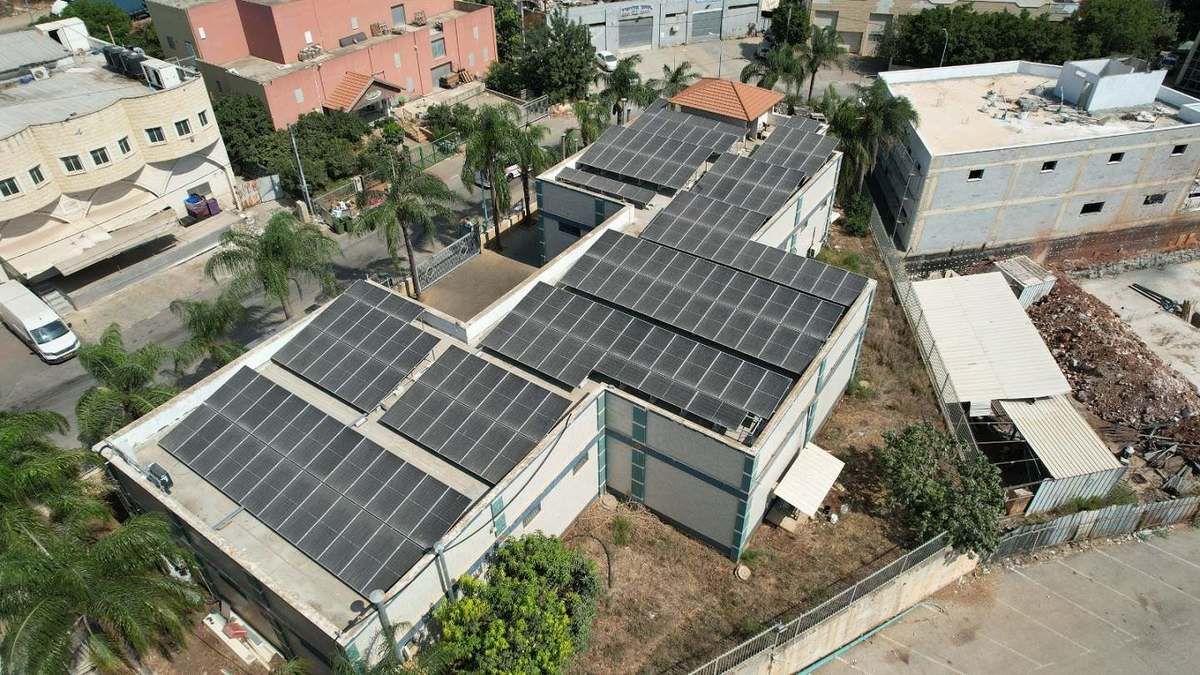
The goal is to understand how the solar system fits into the real activity of the business, how much of the generation is likely to be used on site, and how the rest of the system should be designed according to the track and the conditions that apply to the project.
In a solar system, even a single degree can affect output
One of the things that is easy to miss when you look at a solar system from the ground is the level of precision its design requires.
A solar panel is not just “placed on the roof”.
Orientation, mounting angle, pitch, the spacing between rows of panels, mutual shading and shading from other equipment on the roof all affect the generation profile.
On a simple roof, these decisions matter. On a large industrial roof, or a roof with several levels and orientations, they matter even more.
Even a small change in angle can affect how much irradiance the system captures and its generation profile over the year. Multiply that effect across hundreds of panels and many years of operation, and precise design takes on real financial weight.
That is exactly why we at Rotem Energy insist on design that is never separated from execution. The engineering team and the field crews work as part of the same process, so that the system that was engineered is also the system that gets built.
A complex roof is not necessarily a worse roof, it simply needs more engineering
Factories and commercial buildings almost never come as a “blank page”.
There are air-conditioning units, fans, chimneys, machine rooms, canopies added over the years, changes in height and levels facing different directions.
Instead of treating all of these as a reason to give up on parts of the roof from the outset, each area should be assessed on its own.
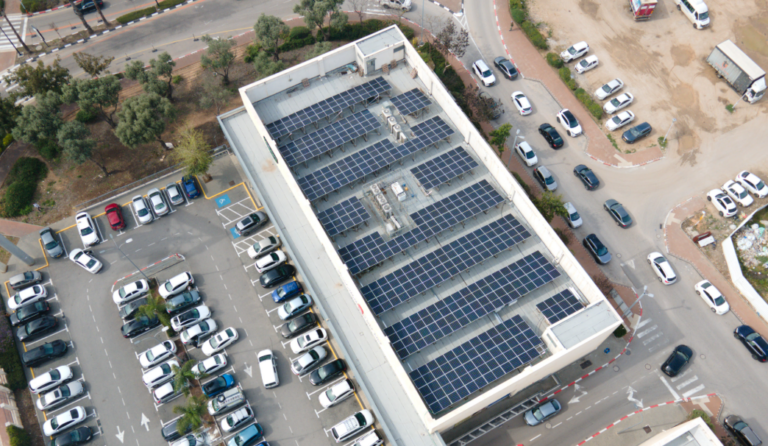
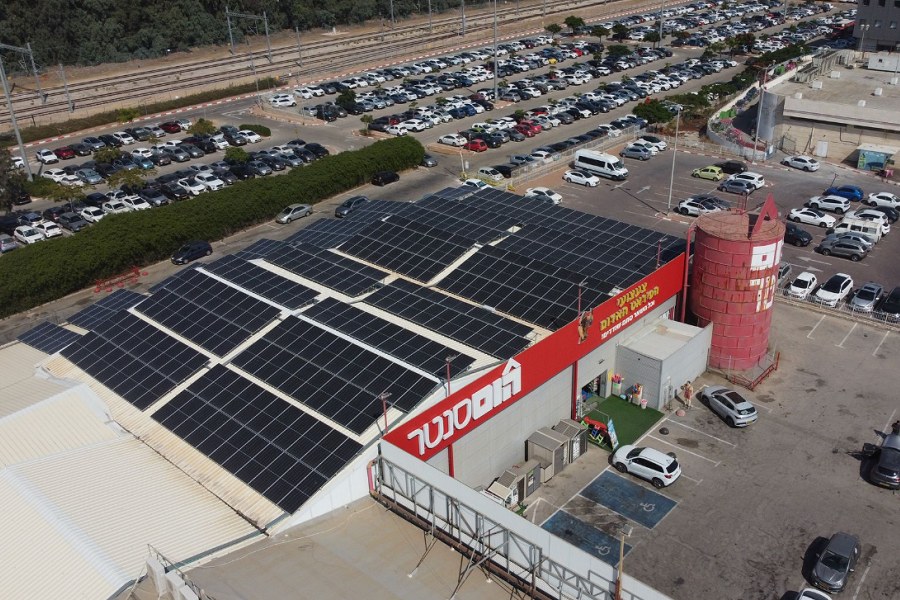
A good example is the system Rotem Energy built on the Home Center roof in Netanya.
The roof has several levels and orientations, so the design was tailored to the characteristics of each part of it. The building now carries a 359 kW system with a planned annual output of 557,651 kWh.
The project illustrates an important principle: on a complex roof, the value does not come only from choosing the panel. It comes from the ability to take many small constraints and turn them into one design that works as a whole.

The advantage of one team handling the entire project
A commercial solar system is not a product that arrives in a box and gets assembled on the roof.
It is an engineering project that includes electrical design, structural engineering, permits, infrastructure, work with the electric company, procurement, installation, testing, grid connection and then monitoring and maintenance.
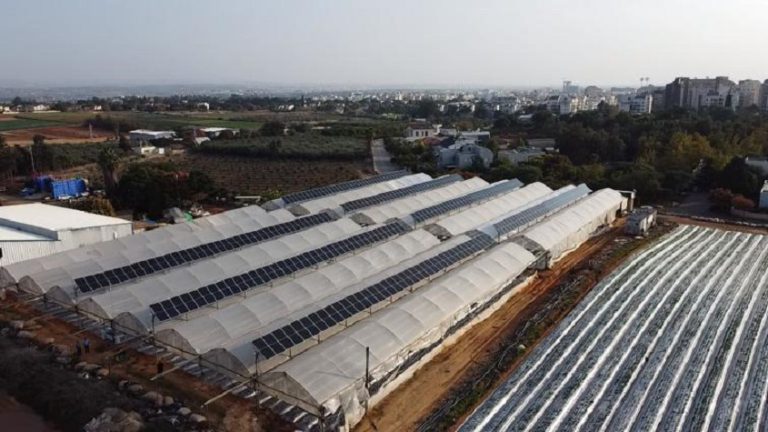
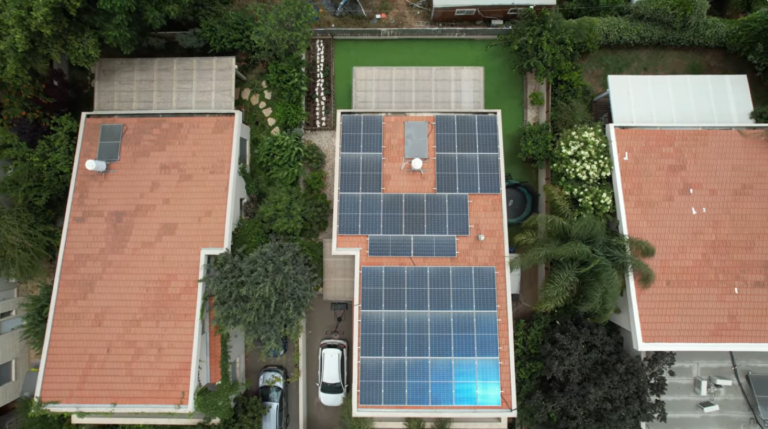
Rotem Energy specializes in building large-scale solar installations and provides the full range of services a project needs in one place, from systems on private buildings to factories, industrial buildings, greenhouses, commercial facilities and solar fields.
One of the most important differences is Rotem Energy’s installation crews.
Instead of handing the build over to outside installation contractors, the company’s own crews carry out the installation. That keeps the link between the engineering design and what actually happens on the roof, and maintains a consistent standard of work throughout the project.
When a designer sets a particular angle, spacing or position, those are not just lines on a drawing. Every such decision can affect the system’s cumulative output.