In an active factory, every hour counts. Machines are running, employees move between departments, trucks come and go, and orders need to reach customers on time. Within this routine, the idea of installing a solar system on the factory roof may raise a significant question: how do you carry out an engineering project of this scale without disrupting business operations?
The good news is that in many cases, significant parts of the installation can be carried out alongside ongoing operations. That said, this requires early planning, coordination between the parties involved, and an understanding of the constraints on site.
So how do you approach installing a solar system for an active factory, and what is important to consider before you start?
The Real Challenge: When the Roof Becomes a Work Site
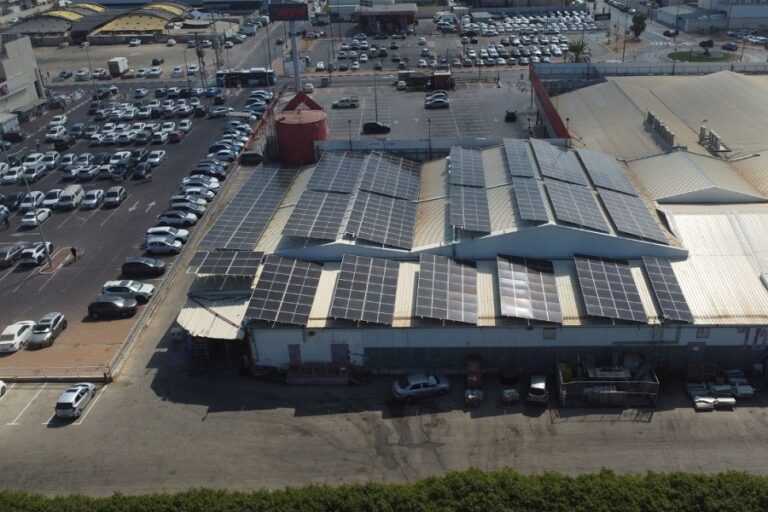
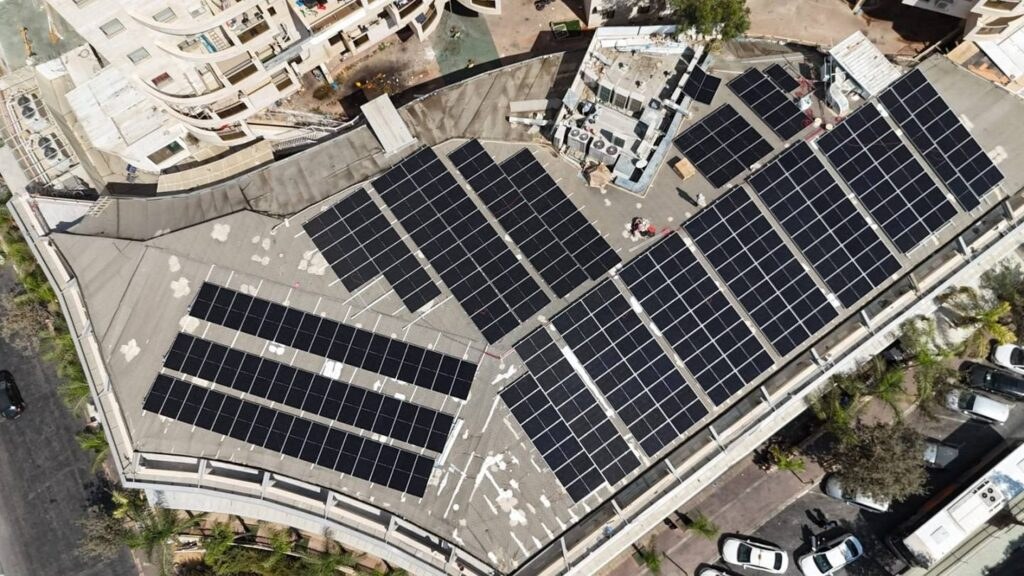
Unlike a new building that is not yet occupied, an active factory is a complex working environment. The roof may hold air-conditioning systems, blowers, electrical infrastructure, and other equipment required for production.
Activity also continues around the building: loading and unloading goods, the movement of forklifts and trucks, suppliers arriving, and walkways used by employees.
For this reason, installing a commercial solar system is not limited to placing panels on the roof, it requires attention to the entire building and to the activity taking place within it.
One of the main challenges is to create a safe separation between the work areas of the installation teams and the ongoing operations of the factory, while maintaining essential access routes and traffic lanes.
Advance Planning: The Key to Minimizing Disruption to Operations
Before beginning the construction of a commercial solar system, it is important to carry out a professional assessment of the building and the existing infrastructure.
The assessment may include the condition of the roof, its load-bearing capacity, the location of technical equipment, access routes, the electrical infrastructure, and the system’s connection options.
At this stage, the professional team at Rotem Energy comes into the picture, accompanying the factory owners from the assessment and initial planning stage through to completion of the project. The support includes addressing the engineering characteristics of the building, the operational needs of the factory, and the coordination required between the parties involved, with the aim of planning the installation in a way that minimizes disruption to ongoing operations as much as possible.
An active factory also requires coordination with those responsible for operations and safety. For example, when the installation work requires the use of a crane, it is necessary to examine where it can be positioned, how the equipment will be lifted, and whether the operation requires a temporary closure of an operational area.
The earlier the constraints are identified, the easier it is to plan the sequence of work and reduce conflicts with ongoing operations.
For more information on planning and building commercial solar systems
How Do You Coordinate the Installation Work with Factory Operations?
Not every factory operates in the same way. Some factories work a single shift, others operate around the clock, and some have periods of increased production load. Therefore, the work plan must take into account the operating routine of each factory.
Among the options that can be considered:
- Dividing the work into stages: carrying out the installation in defined areas instead of opening several work areas at once.
- Coordinating equipment-lifting times: choosing time windows when truck and employee traffic is relatively limited.
- Maintaining access routes: planning storage areas for equipment and materials without blocking essential passageways.
- Coordinating with production and maintenance managers: updating the relevant parties before actions that may affect factory operations.
- Preparing for changes: defining a course of action in the event of delays, unsuitable weather conditions, or operational constraints.
It is important to understand that it is not always possible to prevent every disruption. The goal is to identify sensitive operations in advance and manage them in a planned and controlled manner.
Safety in an Active Factory: Not Just on the Roof
Installing a solar system for a factory requires strict attention to workplace safety, especially when installation teams operate in an environment where other employees continue their daily routine. Work at height, lifting equipment, the use of power tools, and work near existing infrastructure all require preparation in accordance with safety requirements and the characteristics of the site.
Attention must be given to fencing off work areas, preventing passage beneath lifting zones, defining safe access routes, and coordinating with the factory’s safety officer. Another issue is maintaining access to the existing equipment on the roof. Even after the installation is completed, appropriate access must be allowed to systems that require inspection and maintenance.
Proper planning should take into account not only the day the system is installed, but also the years in which the factory and the solar system will operate side by side.
Does Installing a Solar System Require a Power Shutdown at the Factory?
This is one of the most important questions for factories whose production processes depend on a continuous power supply, and the answer depends on the characteristics of the existing electrical system, the planned method of connection, and the requirements of the authorized bodies.
Some of the installation work may be carried out without needing to disconnect the factory’s power supply. However, during the connection stages, testing, or making changes to the electrical panels, planned disconnections or actions that affect the power supply may be required.
In such cases, it is important to coordinate the actions in advance with those responsible at the factory, to examine the impact on the production lines, and to choose the most suitable time possible.
Factories that operate cooling systems, sensitive machinery, or continuous production processes should give this special attention.
Who Is Responsible for Coordinating All the Parties in the Project?
When a commercial solar system is being built in an active factory, various parties are involved in the process: planning and engineering professionals, installation teams, electricians, operations managers, and safety personnel.
Without proper coordination, even a relatively simple action can create delays or unexpected disruptions.
It is important to determine in advance who is managing the work with the factory, how updates on the project’s progress are provided, and who to turn to when a problem arises on site.
Continuous communication between the installation teams and the factory representatives makes it possible to deal in an orderly manner with constraints that emerge during the work.

Installing a Solar System for a Factory with Rotem Energy
Factories that want to use their roof space to produce solar electricity need a solution that takes into account not only the energy potential of the building, but also its operational reality.
At Rotem Energy, we have our own professional installation teams, and we accompany solar projects from the planning stage through to completion of the installation.
Familiarity with the building’s characteristics, planning the work, and coordinating with the relevant parties make it possible to approach the project in an orderly manner, while addressing the factory’s needs and the existing constraints.
Ultimately, a commercial solar system should integrate into the business’s operations and not become an obstacle to it.
Planning to install a solar system on the roof of an active factory? The Rotem Energy team will be glad to examine the building’s characteristics, the factory’s needs, and the options for building a solar system suited to your operations.