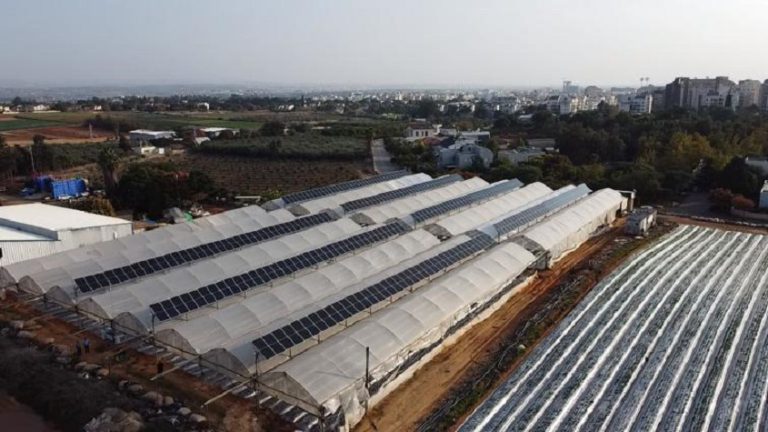
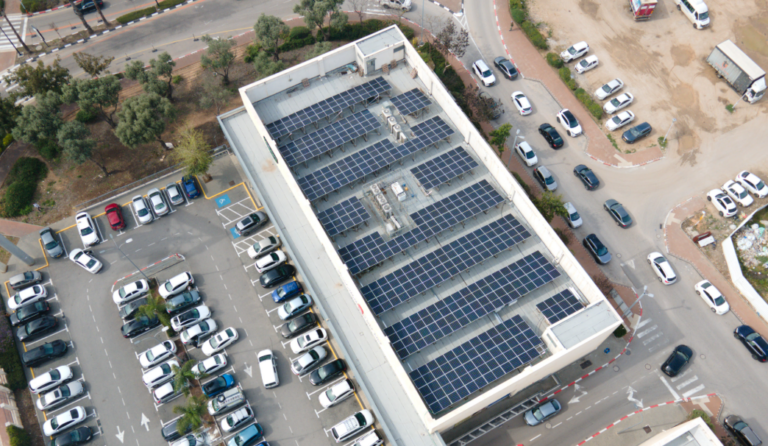
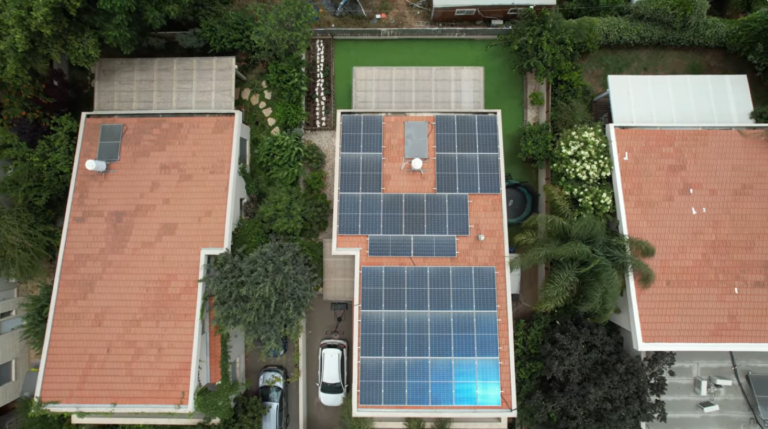
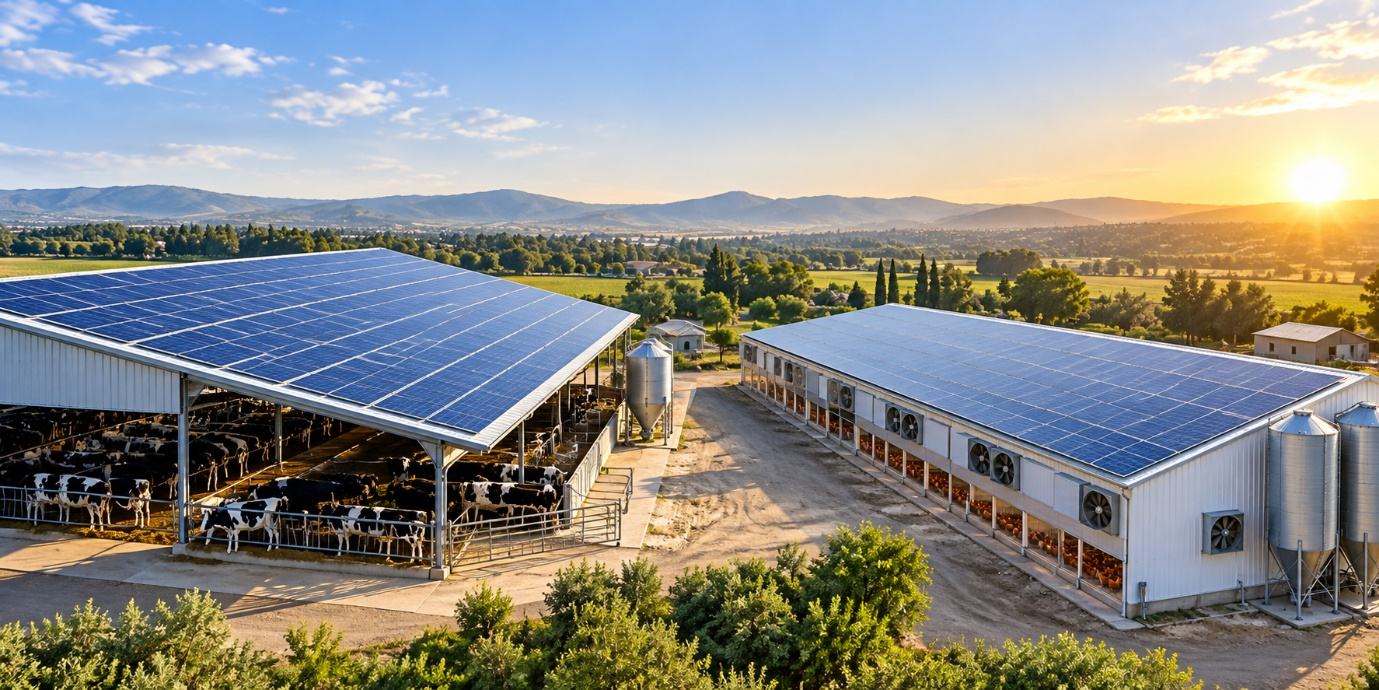
On the same farm, a cowshed and a chicken coop can stand a few dozen meters apart. Both have large roofs, both use electricity, and at first glance both look like excellent candidates for a solar system.
But that is exactly where the mistake begins.
A solar system on a cowshed and a solar system on a chicken coop are not necessarily the same project.
The structure is different, wind loads and the mounting structure may differ, the equipment on the roof is different, and the electricity consumption patterns of each operation can be very different too.
That is why at Rotem Energy we do not start with the question “how many panels fit on the roof?” but with a more important one: what building are we looking at, how does it work, and what is the right system for it?
Before electricity: start with the building
Agricultural roofs can look very simple from the outside. In practice, each one is an engineering system in its own right.
A cowshed is usually a building with long spans and large openings. A chicken coop, on the other hand, has other operational systems: ventilation, openings, equipment and sometimes additional infrastructure that affects how the system can be laid out.
Add to that the age of the building, the type of roof, its condition, the pitches, the distances between elements and the load the structure can take.
Wind matters too. Solar panels and their mounting structures have to be designed for the building and the conditions it stands in. An open structure does not necessarily behave like a closed one, so a design is never copied from one roof to another.
This is where engineering experience turns into numbers.
The Rotem Energy team comes to the site, measures and examines the building, and it is the engineering assessment that allows the system to be designed for that specific roof rather than for a general assumption about “cowsheds” or “coops”.
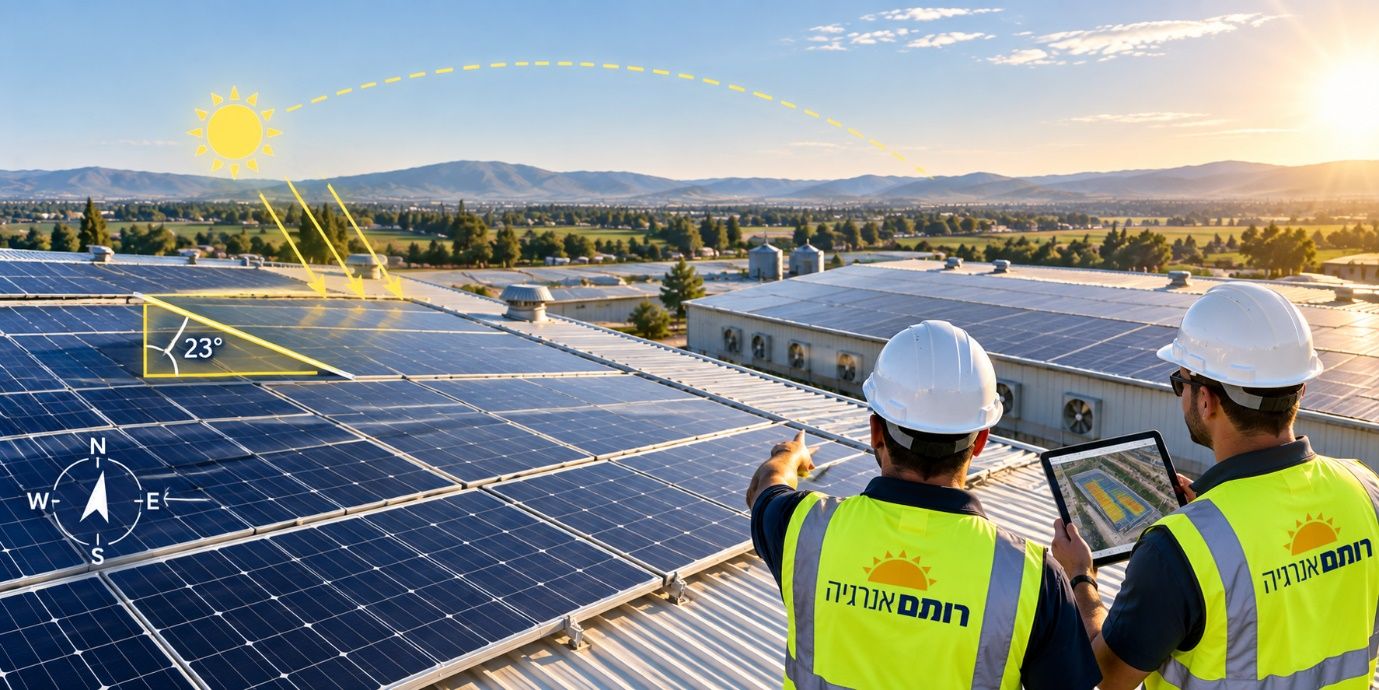
Even a single degree of angle can matter
In a large solar system, the question is not only how many panels can be laid on the roof.
Orientation, pitch, mounting angles, spacing and possible shading all affect how much irradiance reaches the panels and the generation profile over the year.
With hundreds of panels and a system meant to run for years, even small design differences can add up to differences in output.
That is why at Rotem Energy the design looks at the roof as a whole: where each row should go, which areas are worth using, where shading may occur, and how to design the system to get the most out of the existing conditions.
The goal is not to fill the roof with panels. The goal is to generate electricity from the roof correctly and efficiently over time.
A cowshed and a chicken coop can use electricity in completely different ways
After the building comes the electricity, and here another difference appears that you do not always see when standing in the yard looking at the roofs.
Every agricultural operation has an electricity consumption profile.
Chicken coops may have significant consumption linked to ventilation, cooling, heating, lighting and operational systems, among other things, and part of that consumption can continue into hours when the solar system is no longer generating.
In cowsheds, the consumption profile may be shaped by milking times, milk cooling systems, ventilation, misting, pumping, washing and other equipment.
The important point is that the consumption curve is not assumed in advance.
It is measured.
A solar system generates during daylight hours, while farm operations can use electricity around the clock. The better you understand when the building uses electricity and how much, the better the system can be designed and the right financial model for the project assessed.
That is why two systems on the same farm, even connected to the same infrastructure, can lead to different designs.
And what happens when consumption continues after sunset?
This is where energy storage comes into the picture.
A standard solar system generates electricity when there is sunlight. If a significant part of the farm’s consumption happens in the evening and at night, there is a gap between generation hours and consumption hours.
Under the right conditions, a storage system can be one of the tools for dealing with that gap.
But it is important to be precise: storage is not something added automatically to every coop or cowshed.
The decision should be based on consumption data, the characteristics of the connection, the regulatory options and the financial viability of the project.
On some farms storage can be a significant part of the design, and on others it is not needed. First you collect the data, then you design.
The grid connection can change the whole picture too
You can stand in front of a huge roof and see potential for hundreds of kilowatts, but the roof area is only part of the equation.
You also need to check the existing electrical infrastructure and the options for connecting and exporting to the grid.
On farms this can be especially complex when there are several buildings, different switchboards, infrastructure added at different times, or a need for infrastructure works.
That is why, as part of the feasibility study, Rotem Energy also examines the existing connection and, where needed, handles the process with the electric company and the other infrastructure works required.
Sometimes the conclusion is that a very large part of the roof can be used.
In other cases, it is the connection or the electrical infrastructure that sets the limits of the project.
The Rotem Energy advantage: the same team from design to roof
One of the things that sets Rotem Energy apart is how the work is carried out.
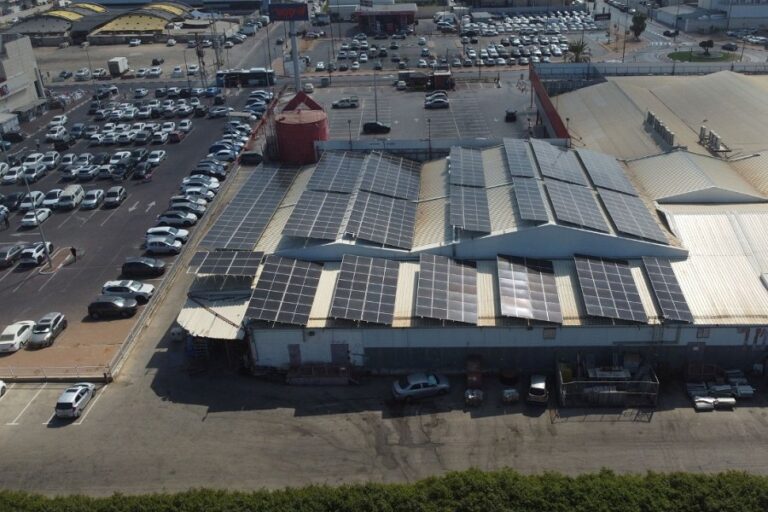
The installation crews are Rotem Energy’s own crews, not outside installation contractors. On the chicken coop project in Kfar Hess, for example, the company’s in-house crew carried out the installation, and Rotem Energy accompanied the project from obtaining the permits to the grid connection.
See our projects at Rotem Energy
For the client, that means professional continuity: design, project management and on-site execution are not disconnected stages passed from hand to hand.
A project manager accompanies the client throughout, and the team handles design, permits, infrastructure and the connection process. Once the system is connected to the grid the work does not end: the system’s data can be tracked and its performance monitored over time.
In a system meant to run for years, the quality of the installation matters as much as the quality of the equipment installed.
And what about greenhouses?
A greenhouse brings a different set of considerations.
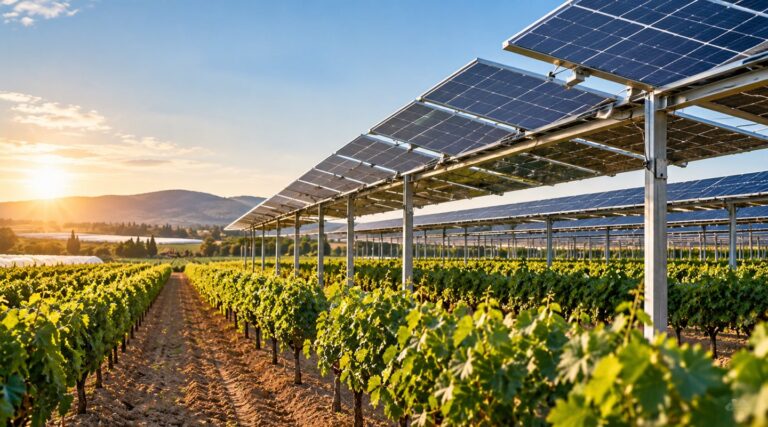
Here you look not only at electricity generation and the building’s ability to carry the system, but also at the farming that happens underneath it and the need to maintain the right growing conditions.
The system has to suit both the structure and the way it is used.
Read more about solar systems for greenhouses at Rotem Energy.
So which farm building is right for a solar system?
The answer may be the cowshed.
It may be the coop.
It may even be both, but with two systems designed differently.
To know, you need to bring together the condition of the building, the roof area, orientations and shading, the electrical infrastructure, the consumption curve, the connection options and permitting.
That is exactly Rotem Energy’s expertise: taking the data from the field and turning it into a solar system designed for your building, not for an “average agricultural building”.