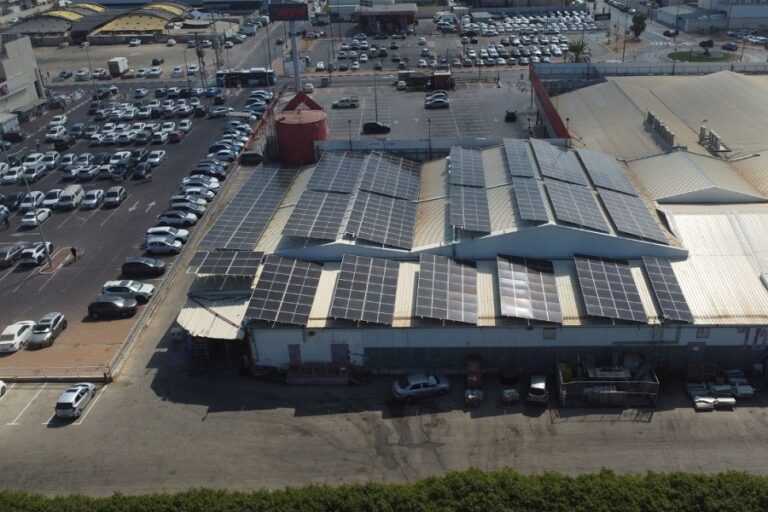
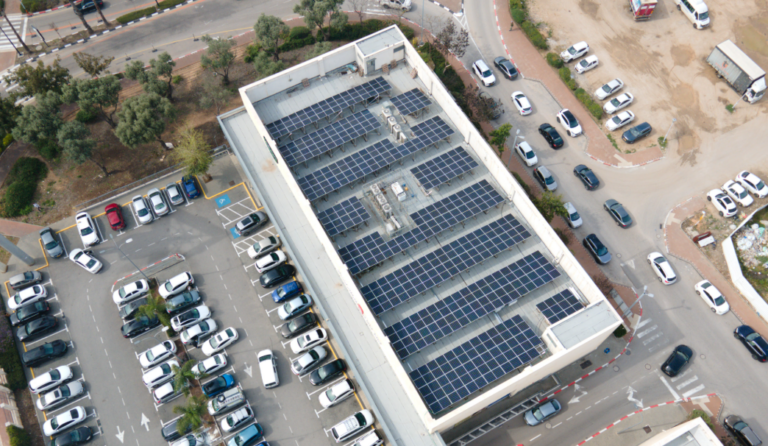
In 2026 more and more business owners are realising that the roof of their building is not just part of the real estate but a financial asset in its own right. Whether it is a warehouse, an industrial building, a logistics centre, a large shop or an office block, generating electricity on the roof has become one of the steadiest, most calculable financial decisions available.
The shift is not driven by environmental considerations alone. It rests on a combination of clear government policy, long-term tariffs, and advanced tools that let business owners understand in advance – before installation – what their property can really earn.
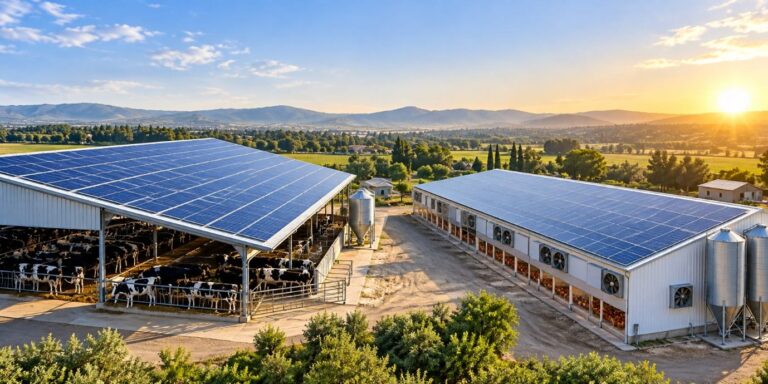
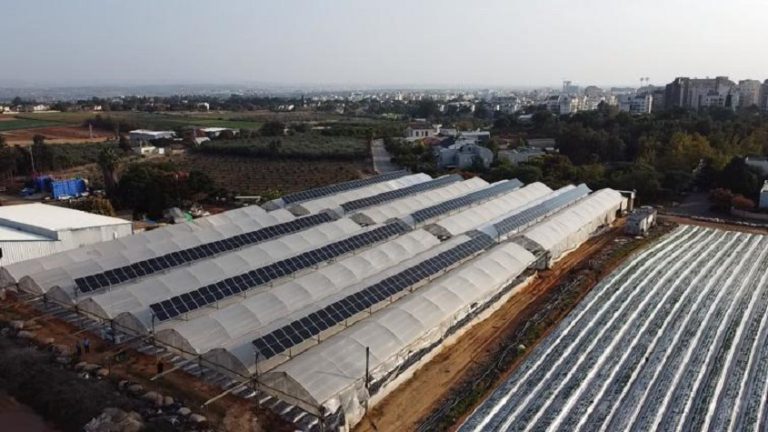
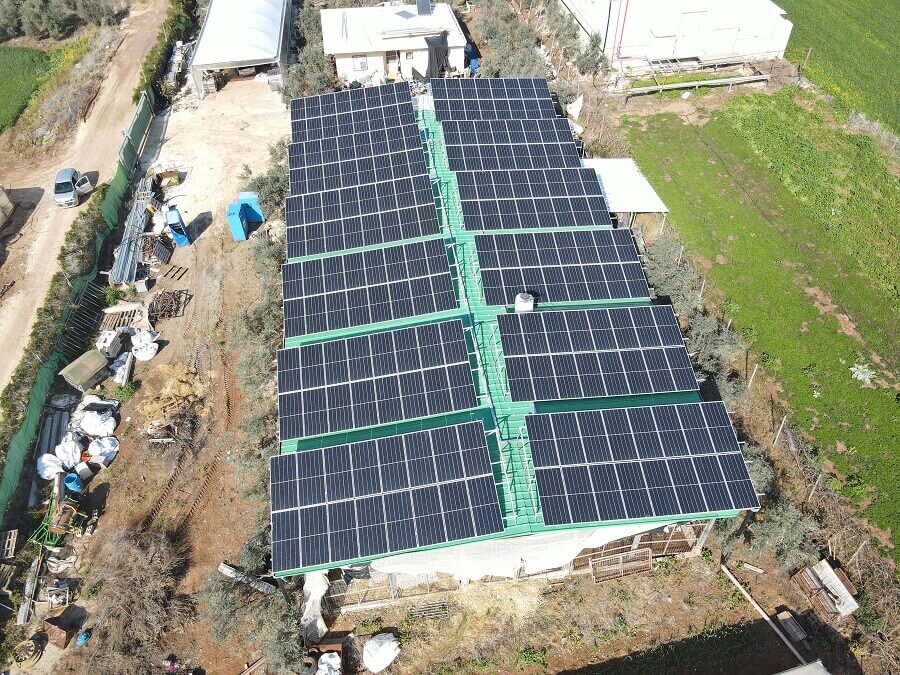
Our company, Rotem Energy, has built many solar systems across the country: on cattle sheds, poultry houses, warehouses, supermarkets and other industrial buildings.

Clear government policy – and an opportunity for business
Israel has set a target of generating 30% of its electricity from renewable sources by 2030, and the main route to it is making use of built-up areas, above all the roofs of commercial and industrial buildings.
In recent years the Ministry of Energy and Infrastructure, together with the Survey of Israel, has invested in smart mapping systems that give property owners accurate information about the solar potential of their roof. More details
For a business the implication is simple: the state is not only encouraging solar systems, it is providing the planning and regulatory infrastructure to make an informed, data-based decision rather than a gut call.
Why is a business roof such a clear advantage?
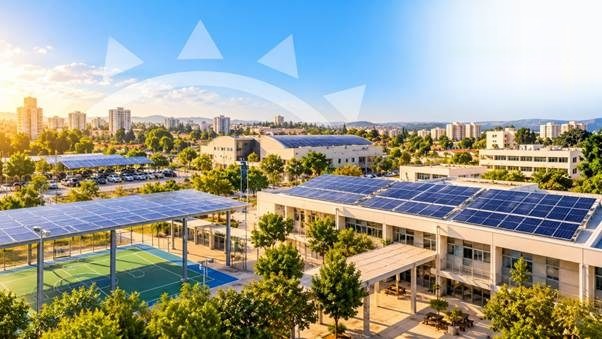
Unlike private roofs, commercial roofs are usually large, continuous and relatively unobstructed. That means a high-capacity system can be built, generating a significant amount of electricity and delivering either a steady annual income or a substantial operating saving.
In many cases the business operates mainly during daylight hours – exactly when the system is generating. So beyond the income from selling the surplus, the business directly reduces its ongoing electricity costs and improves its cash flow.
What really drives the profitability of a commercial solar system?
Profitability does not rest on any single factor but on a combination of parameters:
- The size of the roof and the area free for installation.
- The orientation of the roof and the level of shading.
- The location of the property (including eligibility for the urban premium). Learn more about the urban premium.
- The shape of the business’s electricity consumption.
Planning and regulatory support carries significant weight too – from an engineering feasibility check, through correctly sizing the system, to an efficient grid connection. At Rotem Energy we handle the whole bureaucratic side with every authority involved and leave you free of it.
That is precisely where working with a company that knows the ground, the regulation and the tariff arrangements in depth pays off.

Steady long-term income, not a financial gamble
One of the standout advantages of a commercial solar system is certainty. The agreement with the electric company is signed for a long period at a tariff known in advance. That means income, or savings, that do not depend on interest rates, the stock market or economic volatility.
For many businesses it is an unusually solid alternative to other investment routes – one that fits into the business’s own activity and needs no day-to-day management.
Beyond the profit: a reputational and commercial advantage
A business generating clean electricity on its roof signals stability, innovation and environmental responsibility. In an era when clients, partners and institutional bodies also weigh sustainability and responsible conduct, a solar system carries clear added value beyond the bottom line.
This is not a green slogan but a move that strengthens the brand and positions it as part of the modern economy of 2026.
In summary,
A solar system on a business roof is particularly worthwhile when the property is owned by the business, has free roof space, significant electricity consumption and a long-term outlook.
It does not disrupt day-to-day operations, it makes use of an existing asset, and it creates financial and reputational value for years. In 2026, more than ever, the question is not whether it is a good idea but whether it makes sense to leave the roof as unused space.

Do not wait – call us on *8426 or leave your details
We would be glad to help!
You may also be interested in: the green route | the urban premium | solar system installation in Netanya