Have an empty roof? It may be a source of income you are not using yet
When people think about the roof of their home, they usually don’t think of it as an asset that can generate income. But with a home solar system, empty roof space can become a source of electricity generation and an income-producing asset that works for you for years.
In localities that meet the eligibility criteria for the urban premium, an extra 6 agorot per kWh is paid, bringing the rate to 54 agorot per kWh, a 12.5% increase in the rate for electricity produced under the benefit. This way, a roof that until now was barely used can become an asset that generates electricity and passive income for years.
In addition, there are financing options that can help with setting up the system and spreading the cost of the investment, so you don’t necessarily have to bear the full cost of the system as a single upfront expense.
But before calculating returns and picturing your roof starting to work for you, there is an important question to answer: is your roof suitable for a solar system?
How much roof space does a home solar system need?
One of the first things examined when planning a solar system is the roof area. But knowing the total area is not enough; it is important to understand how much of it can actually be used for installing panels.
Solar water heaters, collectors, air conditioners, antennas, openings, railings and other elements may take up part of the area or require leaving gaps. You also need to take into account access routes and limitations related to the structure and to the future maintenance of the system.
Therefore, two houses with roofs of the same size will not necessarily allow systems of the same capacity to be installed. Professional planning examines the area actually available and the most efficient way to use it.
Does the type of roof affect the installation?
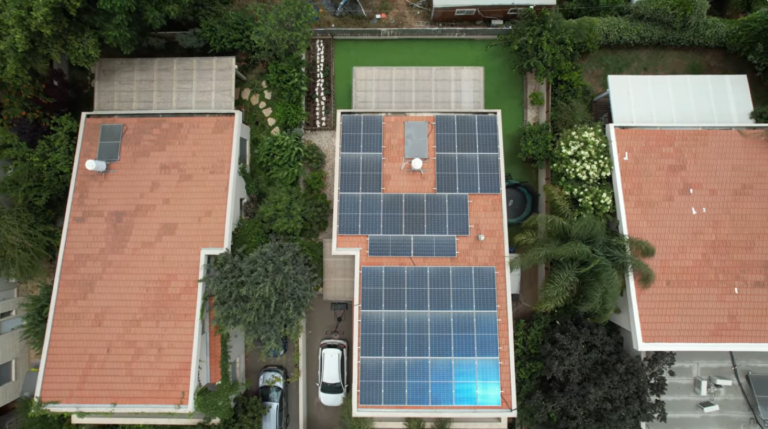
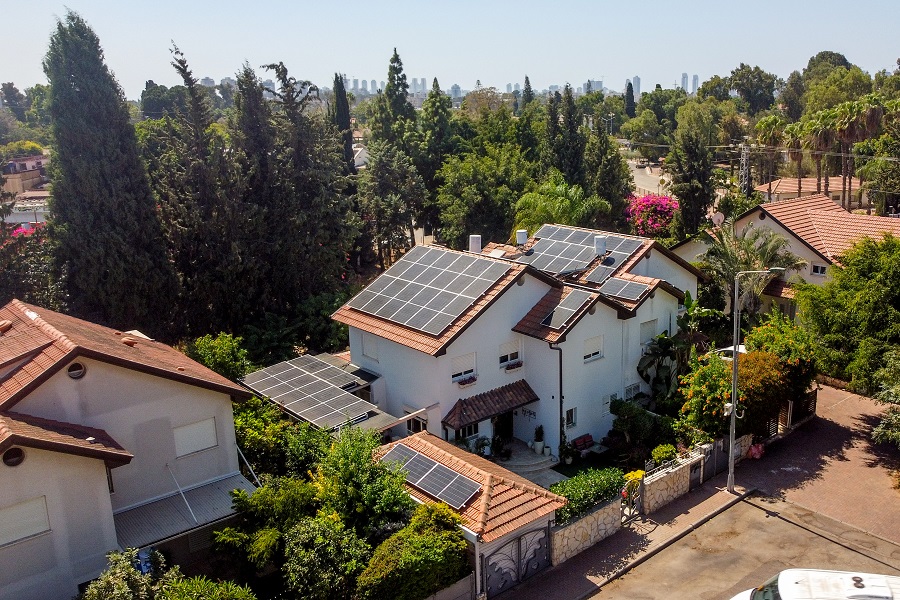
Home solar systems can be installed on different types of roofs, including flat roofs and tiled roofs, but each type of roof has its own characteristics.
On a flat roof, the position of the panels and their angle can be planned according to the conditions on site. On a tiled roof, you need to take into account the existing pitch, the roof’s orientations and its structure.
The goal is not to fit as many panels as possible at any cost, but to plan a system that suits the structure and makes the best use of the space and the sun conditions.
Why does roof orientation matter?
The roof’s orientation and the angle of the panels affect exposure to solar radiation and, accordingly, the system’s electricity generation potential.
That said, a roof that doesn’t face the direction considered ideal is not necessarily a roof that can’t be used. In many cases, the panel layout can be planned across several orientations, or different parts of the roof can be used.
That’s why it’s important to look at the roof as a whole: the area, orientations, angles, shading and the other conditions of the structure, rather than making a decision based on a single factor.
Shading: a small detail that can make a big difference
One of the important things to check before installing a solar system on the roof of your home is how much sun exposure it gets.
Tall trees, nearby buildings, walls, solar water heaters and other elements can cast shade on the panels at different times of day. Shading can affect the system’s output, so it is important to identify it already at the planning stage.
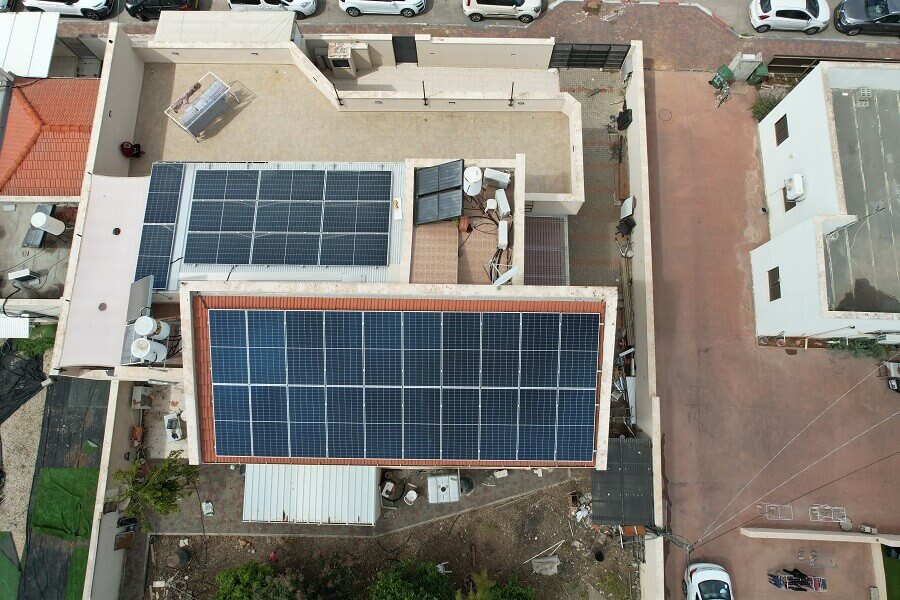
A professional assessment doesn’t only look at the roof at a particular hour; it examines sun exposure and the changes in shading throughout the day and at different times of the year.
And what about the condition of the roof?
A solar system is designed to operate for many years, so it is important to make sure the infrastructure it is installed on is suitable for that.
Before installation, the condition of the roof, its structure and its existing limitations need to be examined. When the roof is old, or when there are engineering or maintenance questions, preliminary checks or works may be needed.
Checking at an early stage makes it possible to identify problems in advance and to plan the system according to the conditions of the structure.
How much electricity can your roof produce?
Production potential depends on the area available for installation, the number of panels that can be placed and their capacity, the installation orientations, the level of sun exposure, shading and other factors.
So, instead of relying on general estimates, it is worth doing a calculation based on the data of your specific roof.
Want an initial estimate? With Rotem Energy’s solar calculator you can enter a few details about your roof and get an initial picture of its potential.
The roof is suitable! What’s the next step?
Once the roof is found to be suitable, you can move on to detailed planning of a home solar system tailored to the structure, the site conditions and the roof’s production potential.
The process includes system design, equipment selection, handling the required licensing and approvals, installation, connection and commissioning. Professional planning and execution are very important: a solar system is designed to operate for years, so the goal is not just to install panels on the roof, but to build a system that can deliver optimal output over time.
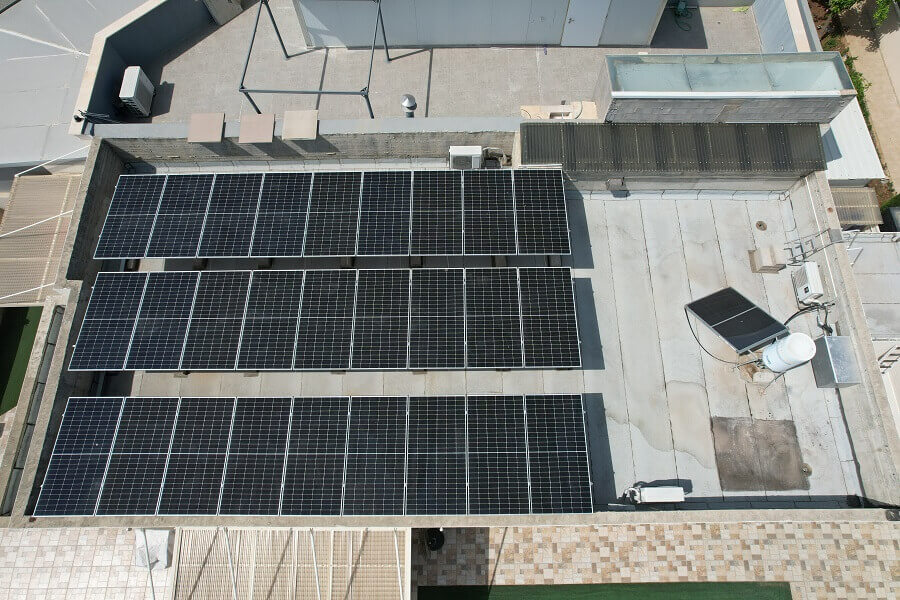
One of the significant advantages of working with Rotem Energy is that installation is carried out by the company’s own professional crews. This makes it possible to maintain control over the work process, ensure quality workmanship and uphold high standards at every stage of the installation.
Rotem Energy’s support doesn’t end once the panels are installed. The company accompanies the project from the assessment and planning stage, through licensing and installation, all the way to connecting the system and monitoring its performance after commissioning.
Before you decide, check how much your roof can produce
A home solar system can turn space you already own into an asset that generates electricity and economic value for years. But to know whether the investment is right for you, you need to start with your roof’s actual data.
Available space, roof type, orientation, shading and the condition of the infrastructure all affect the system that can be installed and its production potential.
Have an empty roof and want to know what you can get out of it? Contact Rotem Energy for an initial suitability check and explore the options for installing a home solar system on your roof.