Agricultural land in Israel is being asked to play more roles than ever. On one hand it produces food, maintains agricultural continuity and strengthens rural communities. On the other, the need to increase electricity generation from renewables drives the search for suitable sites for solar systems, in a country where land is a limited resource.
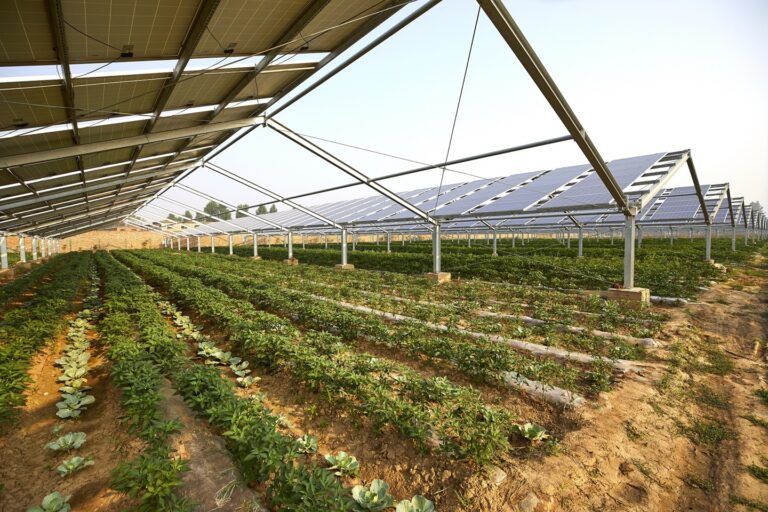
Agrivoltaics offers a way to bring the two needs together. Instead of choosing between farming and generating electricity, the same area can be planned for combined use: crops continue to grow in the ground, and above them a solar system generates electricity from the sun.
In this article we explain what agrivoltaics is, how an agrivoltaic system works, what advantages it can offer farmers, moshavim and kibbutzim, what government policy says, and what to check before promoting a project of this kind.
What is agrivoltaics?
Agrivoltaics is a model of dual land use that combines active farming with generating electricity from solar panels.
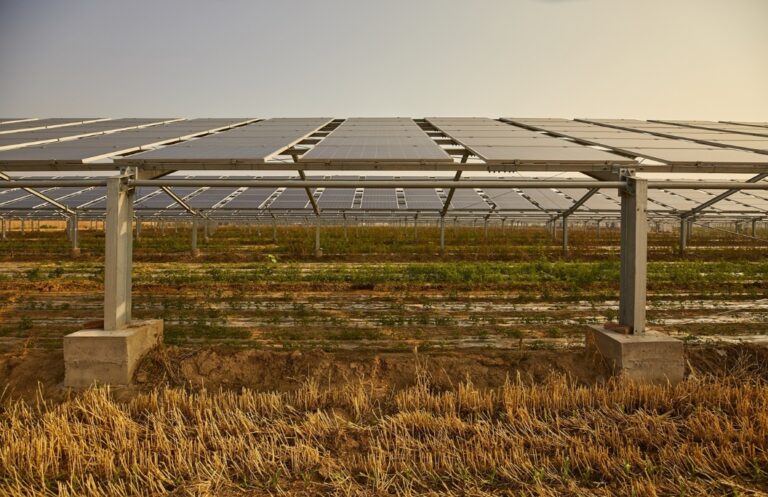
In an agrivoltaic system the panels are not meant to replace the crops or bring cultivation to a halt. On the contrary, they are designed as part of an integrated system in which the land carries on serving agriculture while also producing renewable energy.
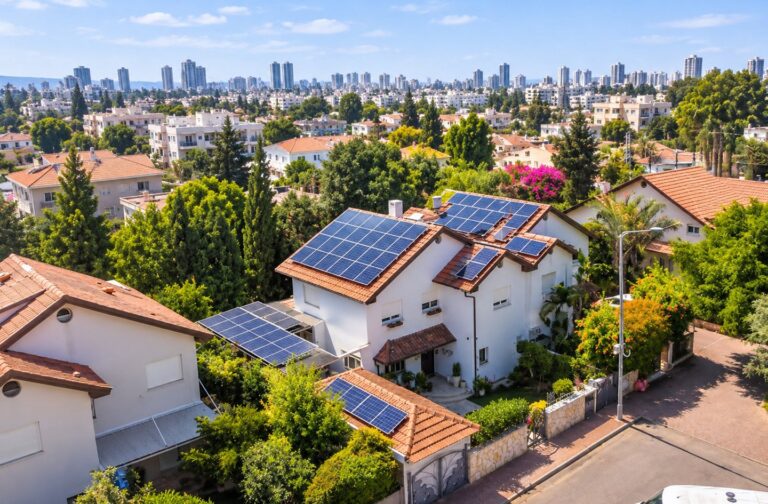
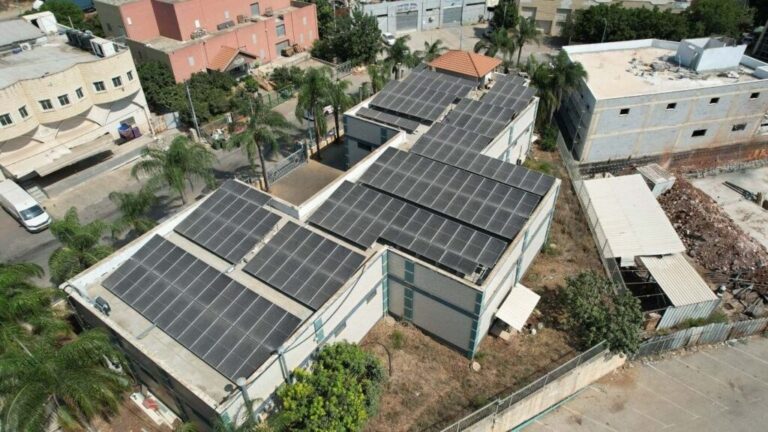
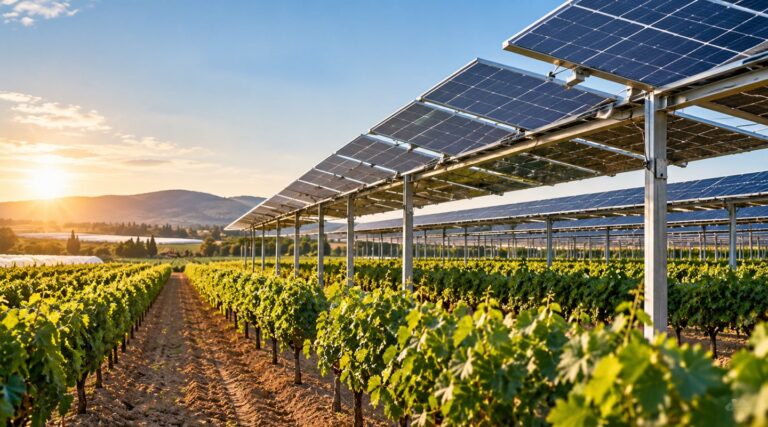
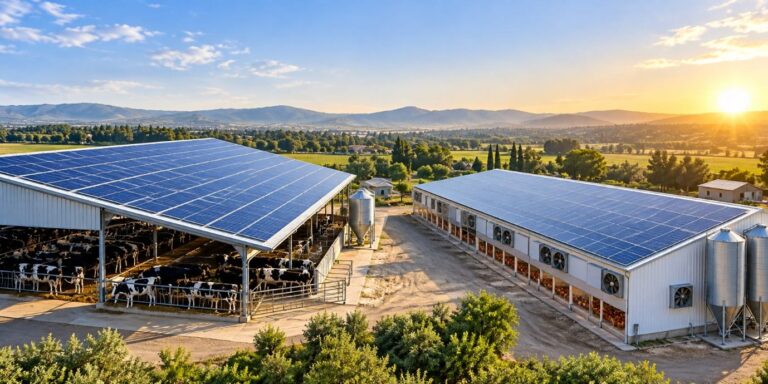
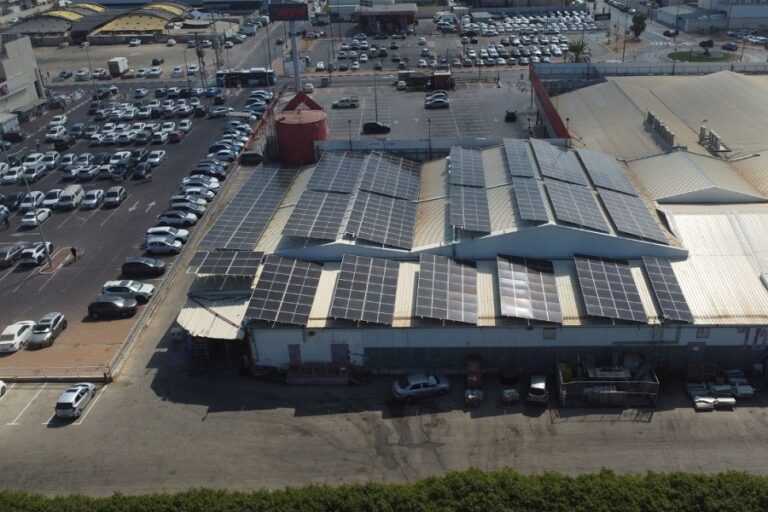
Depending on the type of site and crop, the panels can be installed on raised structures, with spacing that allows farm equipment to pass and work to continue. In other cases solar solutions can be integrated into existing farm buildings: greenhouses, cattle sheds, poultry houses, warehouses and other facilities on the farm.
That means the same dunam can go on producing the same crops it produced before the system was built – and sometimes a higher yield, thanks to the shade the system provides – while taking part in green electricity generation that benefits the environment and creates an ongoing passive income for the farmer. That is the central difference between an agrivoltaic facility and an ordinary ground-mounted solar field: in an agrivoltaic project the farming is not a temporary or marginal use but an essential part of how the system is designed and operated.

How does an agrivoltaic system work?
An agrivoltaic system is made up of solar panels, an engineered mounting structure, inverters, electrical infrastructure, monitoring systems and sometimes energy storage. Its design, though, cannot rest only on the question of how much electricity can be generated.
For the system to fit the farming, the design has to consider the type of crop, the height of the plants, the direction of the rows, the spacing required, the movement of vehicles and machinery, the irrigation systems, the routine of tending the crops and the harvesting or collection work.
A system designed for orchards, for example, differs from one planned above field crops. There are also material differences between a vineyard, a citrus grove, grazing land, vegetable crops and a greenhouse, and they affect the height of the structure, the layout of the panels and the level of shading.
An agrivoltaic system is therefore not a uniform product that can be placed on any plot in the same way. Every project needs an individual design that takes account of the existing agricultural system, the characteristics of the site and the planning and licensing requirements.
The advantages of agrivoltaics
The central advantage of agrivoltaics is the ability to draw double value from the same land. The farming continues, and alongside it a further source of energy and income is created.
For farmers and landowners, generating electricity can provide an additional income that does not depend solely on yields, produce prices or the weather. That income can help create financial stability, fund investment in the farm and support the continued development of the farming operation.
The model matters at a national level too. Israel needs to increase electricity generation from renewables, but it also needs to protect agricultural land and its capacity to produce food locally. Dual land use can reduce the need to choose between the two.
Another potential advantage concerns the effect of the panels on the growing environment. Designed properly, partial, controlled shading can help reduce exposure to strong radiation and cut evaporation from the soil. In some systems the panels can also provide partial protection from the weather.
That said, the effect of shading depends on the type of plant, the geographical area, the season, the density of the panels and the design of the system. Shading that is not matched to the crop can reduce the light available to it. For that reason the system has to be designed with agriculture and energy in view together.

Agrivoltaics on moshavim and farms
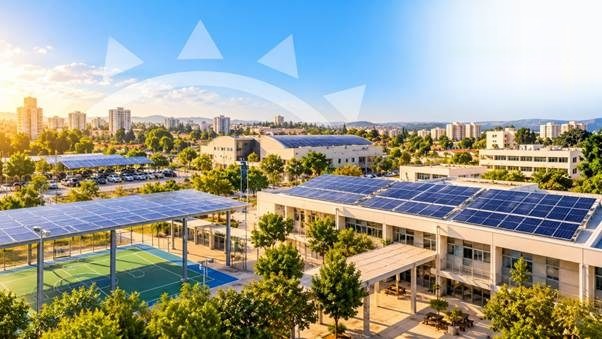
Moshavim have a wide variety of areas and buildings that can be assessed for solar systems: agricultural plots, plot A, greenhouses, growing houses, cattle sheds, poultry houses, canopies, warehouses and farm buildings.
For a farm owner, an agrivoltaic project can turn part of the agricultural infrastructure into an asset that generates electricity for years. Alongside that, it is important to make sure the system does not get in the way of daily work on the farm, the movement of machinery, maintenance of the irrigation systems or the continued development of the farming operation.
Even where a farm has an area that looks suitable, that does not mean construction can begin immediately. Land rights, the planning framework, options for connecting to the grid, site constraints and the fit with the type of crop all have to be checked.
An early assessment makes it possible to understand which solution might suit the farm: a system above crops, an installation on an existing farm building, use of roofs, or a combination of several solutions.
Agrivoltaic systems on kibbutzim
Kibbutzim may have conditions that allow projects on a significant scale: continuous agricultural areas, large farm buildings, cattle sheds, poultry houses, greenhouses, reservoirs and existing infrastructure.
A kibbutz project, though, is usually more complex than a single-site one. It may involve several agricultural branches, areas in different uses, community decisions, commercial agreements, land rights, income sharing and long-term infrastructure planning.
It is therefore important to assess not only the electricity generation potential but the project’s effect on the farming, on the development of the kibbutz economy and on its future needs. Good design should let the solar system fit into the kibbutz’s overall plan rather than restrict agricultural use of the land without proper assessment.
For moshavim and kibbutzim alike, the significant advantage lies in creating productive energy infrastructure while protecting the land and the farming it was meant to serve.

Government regulation of agrivoltaics
Agrivoltaics in Israel has been through a significant process of research, development and regulation in recent years. The Ministry of Agriculture and Food Security is advancing a research-based policy, with the aim of allowing agricultural production and electricity production on the same area.
The government’s approach stresses that the solar system is not meant to turn agricultural land into an energy site alone. Farming has to continue as an essential part of the project, alongside oversight and monitoring mechanisms.
On 15 February 2026 the government approved TAMA 1/24, the national outline plan for agrivoltaic facilities. The plan is intended to create a planning framework for facilities that combine active farming with solar generation, and to set out routes and conditions for building them.
As part of the planning process the agricultural side of the project has to be assessed as well. The Ministry of Agriculture guidelines for preparing an agricultural appendix cover, among other things, the characteristics of the site, the existing activity, the planned crops, the irrigation system, how the land is worked and the effect of the facility on continued farming.
The ministry presents the field as part of its policy for advancing renewable energy in rural areas, in cooperation with bodies including the Ministry of Energy and Infrastructure, the Electricity Authority, the Israel Land Authority and the Planning Administration.
Because the regulation and the arrangements around it continue to develop, it is important to check the current conditions applying to each project rather than rely on general information alone. There may be differences relating to the location of the land, the size of the facility, the planning route, land rights and the requirements of the relevant committee.
Is every agricultural site suitable for agrivoltaics?
Not every piece of agricultural land is necessarily suitable for an agrivoltaic system. Whether a project fits depends on a combination of agricultural, engineering, planning, electrical and financial conditions.
The first thing to assess is the existing farming and the needs of the crop. It has to be clear whether a structure and panels can be installed without getting in the way of equipment, irrigation, tending the plants and harvesting.
Next come the characteristics of the land and the site: the size of the plot, topography, gradients, access routes, existing shading, environmental constraints and the distance from electricity infrastructure.
One of the most significant checks is the possibility of connecting to the grid. A large plot with good solar radiation will not necessarily suit a project if there is no sufficient connection nearby, or if building the connection infrastructure costs more than the project can bear.
A viability assessment is also needed, covering design and construction costs, the expected electricity output, the financing structure, maintenance costs and the possible income over the life of the system.
For more on this, read our guide: Is every piece of agricultural land suitable for an agrivoltaic system?

What are the main stages in advancing an agrivoltaic project?
The first stage is an initial feasibility study. At this point information is gathered about the land, the crops, the rights, the infrastructure and the state of the grid connection, in order to identify opportunities and constraints before investing in detailed design.
If the initial study points to potential, the project can move to conceptual design. That sets out the layout of the system, the height of the structure, the spacing between panels, access routes, the movement of machinery and how the system fits the farming.
The planning and regulatory aspects are then examined, the necessary approvals are obtained and the grid connection application is advanced. In parallel, the financial model and the way the project will be financed are worked out.
Only once the design, the approvals and the infrastructure preparations are complete can the project move to construction, connection, commissioning and ongoing monitoring.
Why choose a company that knows the agricultural sector?
An agrivoltaic project is not just installing panels. It is a project that brings together farming, energy, structural work, planning, licensing, electrical infrastructure and finance.
A company designing a system like this needs to understand what a working day on a farm looks like, which machinery moves across the site, how the irrigation system runs, what work the growing seasons require, and how the panels can be maintained without disrupting the farming.
Alongside knowing agriculture, experience in managing solar projects is required: feasibility studies, engineering design, handling permits, working with the electric company, building infrastructure, installation, connection and monitoring.
The earlier and more professionally the assessments are carried out, the smaller the risk of expensive changes at advanced stages, and the better the system fits both the electricity generation and the needs of the farm.

Rotem Energy: a professional wrap-around service for agrivoltaic projects
Rotem Energy specialises in designing and building solar systems, and supports landowners, farms, moshavim and kibbutzim through every stage of a project.
Our support begins with assessing the site and studying feasibility, and continues through system design, licensing, infrastructure, handling the grid connection process, construction and maintenance. Working through a single professional service means the project is assessed as a whole rather than as a collection of separate tasks.
One of our advantages at Rotem Energy is the combination of familiarity with projects in the agricultural sector and the ability to deliver on the solar side. The company runs its own professional installation crews and stays with the project from the advisory stage through to commissioning.
Click here for more about agrivoltaic solutions from Rotem Energy
To get in touch, leave your details, call us on *8426 or talk to us on WhatsApp
We would be glad to help!