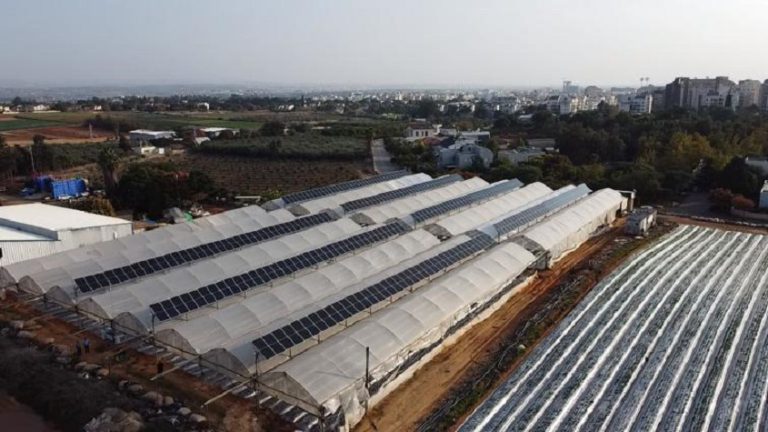
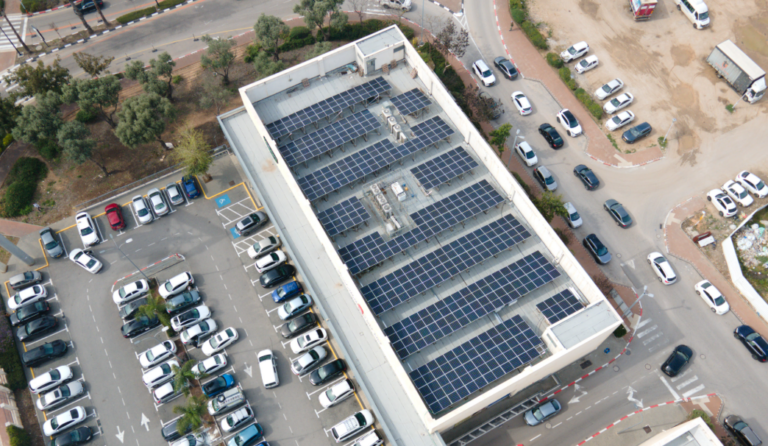
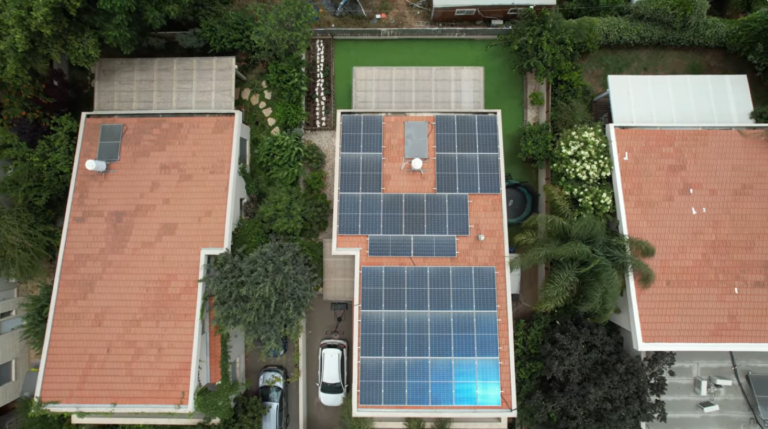
In recent years, Israeli agriculture has been going through a period of change and challenges. Weather conditions, water availability, input costs and labor all affect day-to-day operations, while farm income itself also depends on crop yields, demand and produce prices.
In 2026 as well, the state had to deal with the effects of drought on agricultural water supply and advance measures intended to ease the burden on farmers. This reality shows how much factors that are not always in the farmer’s control can affect a farm’s operations and income.
This raises an important question: does a farm have to rely only on income from its crops? For agricultural landowners, the answer may lie in a resource they already have, the land itself.
Read more on the Ministry of Agriculture website (Hebrew)
The Same Land, Two Sources of Income
Traditionally, the economic value of agricultural land comes from the produce grown on it. However, the development of renewable energy makes it possible to look at the same land in another way.
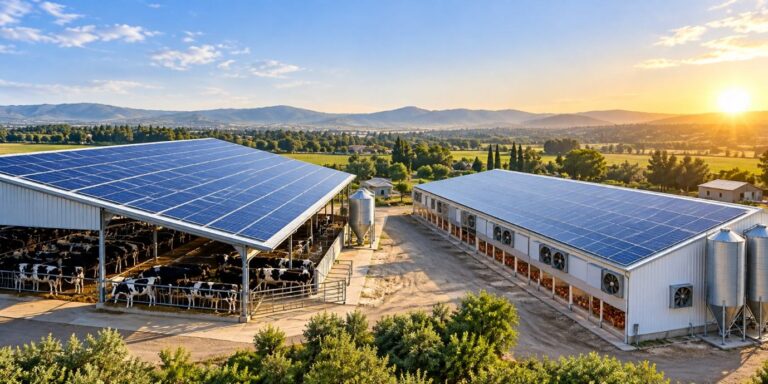
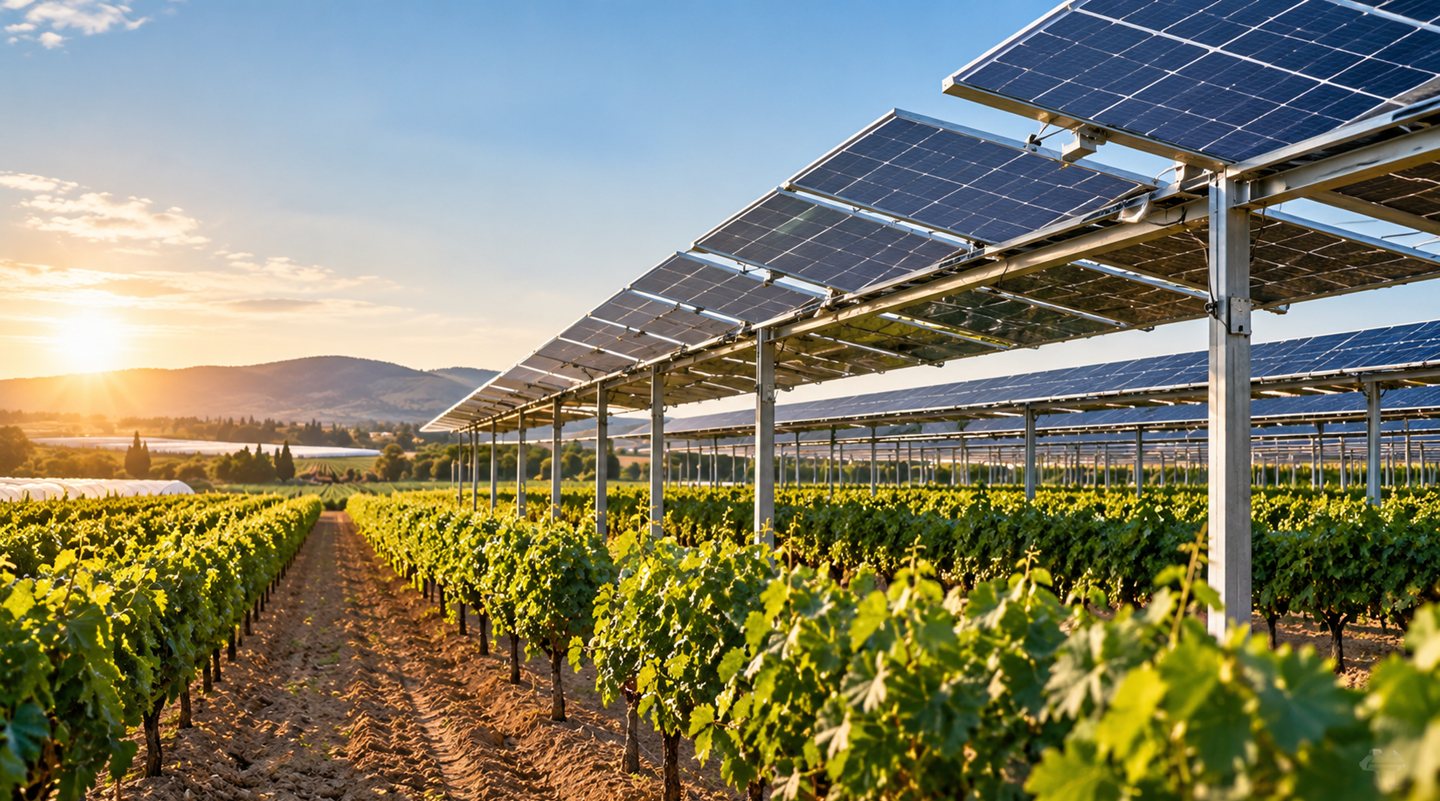
Instead of choosing between farming and electricity generation, agrivoltaics is based on dual land use: continuing agricultural activity while generating solar energy on the same plot.
In effect, this can create a double income from the same land, income from the existing agricultural activity, alongside an additional source of income from solar generation.
Government bodies in Israel are also promoting agrivoltaics, based on the approach of combining the preservation of agricultural activity with renewable energy generation on the same unit of land.
Not Replacing Agriculture, but Adding an Income Engine
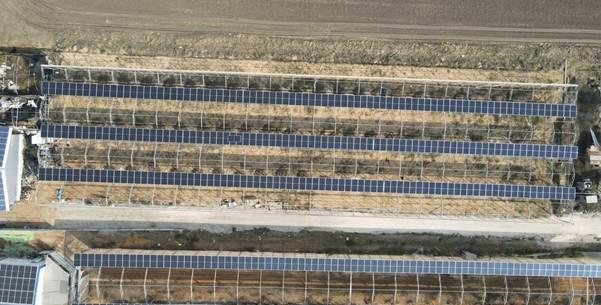
It is important to understand the difference between a ground-mounted solar field and an agrivoltaic system. The idea is not to stop cultivating the land and turn it into a field of solar panels.
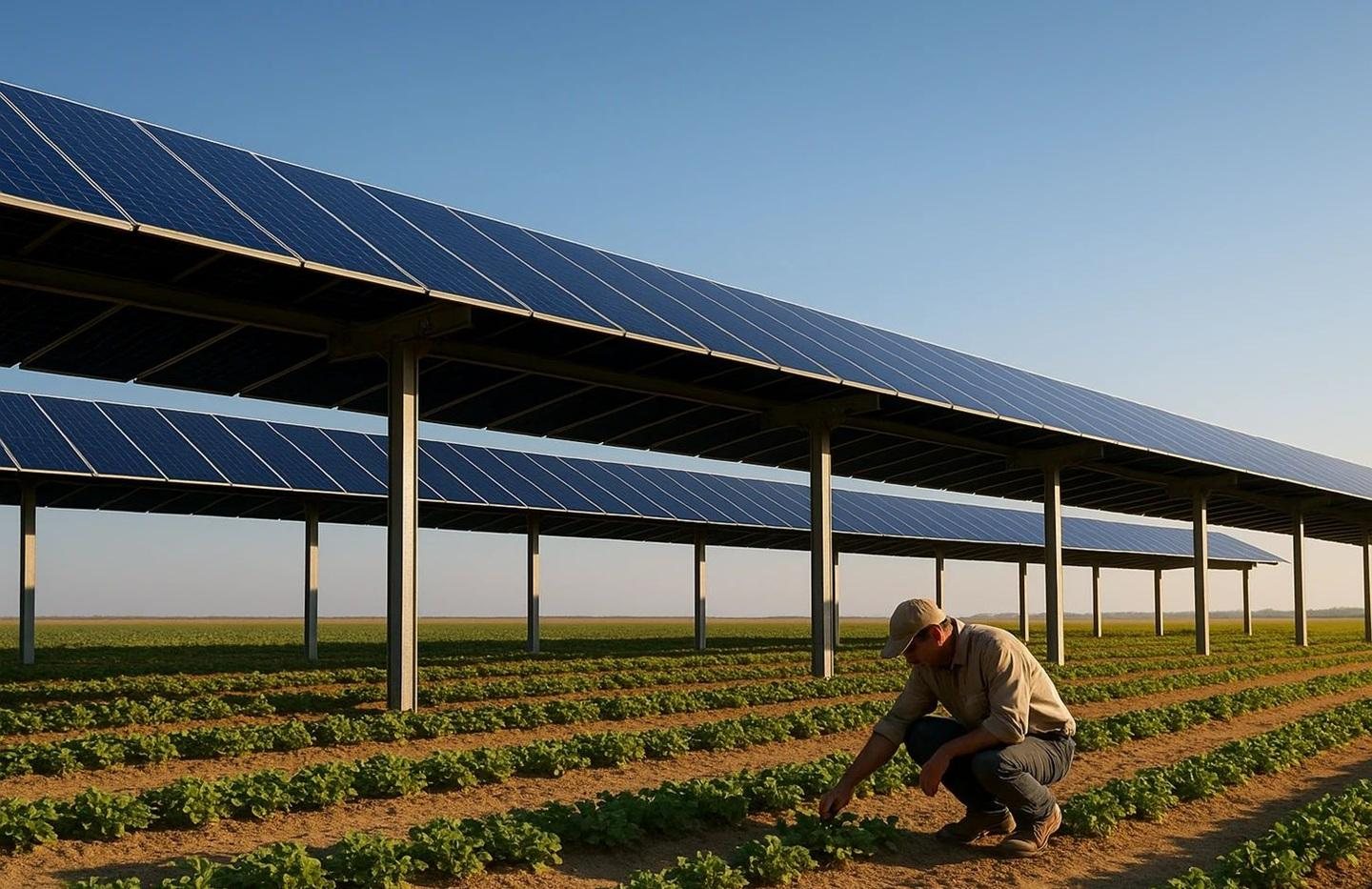
In an agrivoltaic system, farming continues alongside electricity generation. The system is designed according to the site, the crops and the activity taking place there, so the land can still be worked after the installation is built.
For farmers and landowners, this means the opportunity to gain additional value from their existing land without giving up its underlying agricultural purpose.
Learn more about agrivoltaic systems
Passive Income Alongside Crop Income
One of the main differences between the two income sources is the nature of the work involved.
Agricultural income requires ongoing work: sowing or planting, irrigation, crop care, labor, picking or harvesting and marketing the produce. Even after all that, results can vary from season to season.
Solar activity works on a different model. Once the system is built and connected, electricity is generated continuously throughout the system’s lifetime. Depending on the contract model and the project’s characteristics, this can create an additional passive income source for the landowner for years.
This does not mean solar income replaces farming. On the contrary, it can add another layer of income to the farm that does not depend on selling the crop.
And What Happens to the Crops Under the Panels?
This is one of the most important questions to ask before moving forward with an agri-solar project.
Shading, system height, panel density and crop type can all affect agricultural activity. That is why you cannot take the design of a standard solar system and simply apply it to farmland.
In some cases, partial shading may help with heat stress and evaporation, while in others it may reduce yields. That is why proper design starts with understanding the crop and the needs of the farm.
For more information, read about active farming and electricity generation on the same land
Not Every Plot Is Suitable, So We Start with a Check
The possibility of generating two sources of income from the same land sounds attractive, but not every plot is suitable for a project.
Among other things, it is necessary to examine the site’s characteristics, the type of crops, grid connection options, planning and regulatory requirements, as well as the project’s economic feasibility.
So the first question is not how much you can earn from an agrivoltaic system, but whether it can be integrated into your specific land without harming the activity the farmer already makes a living from.
Your Land Is Already Working for You. Can It Work on Two Tracks?
At a time when Israeli agriculture is going through changes and dealing with factors that are not always in the farmer’s control, an additional source of income can bring more financial stability to the farm.
Agrivoltaics offers a different model: not choosing between farming and energy, but exploring how the same land can produce both.
If you own active farmland, or land in a moshav or kibbutz, now is the time to check your land’s potential and see whether you can create a passive income source alongside the income from your existing agricultural activity.